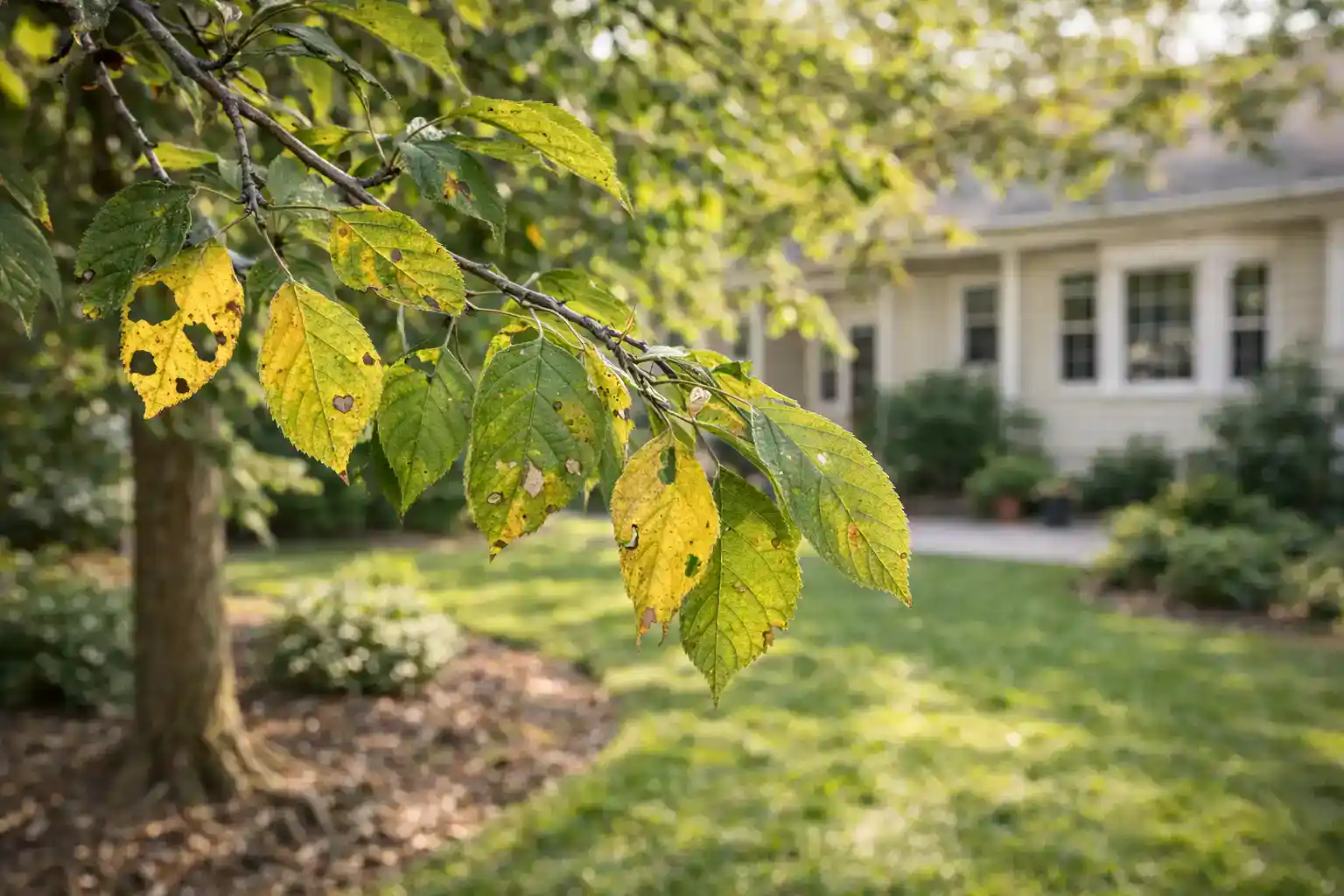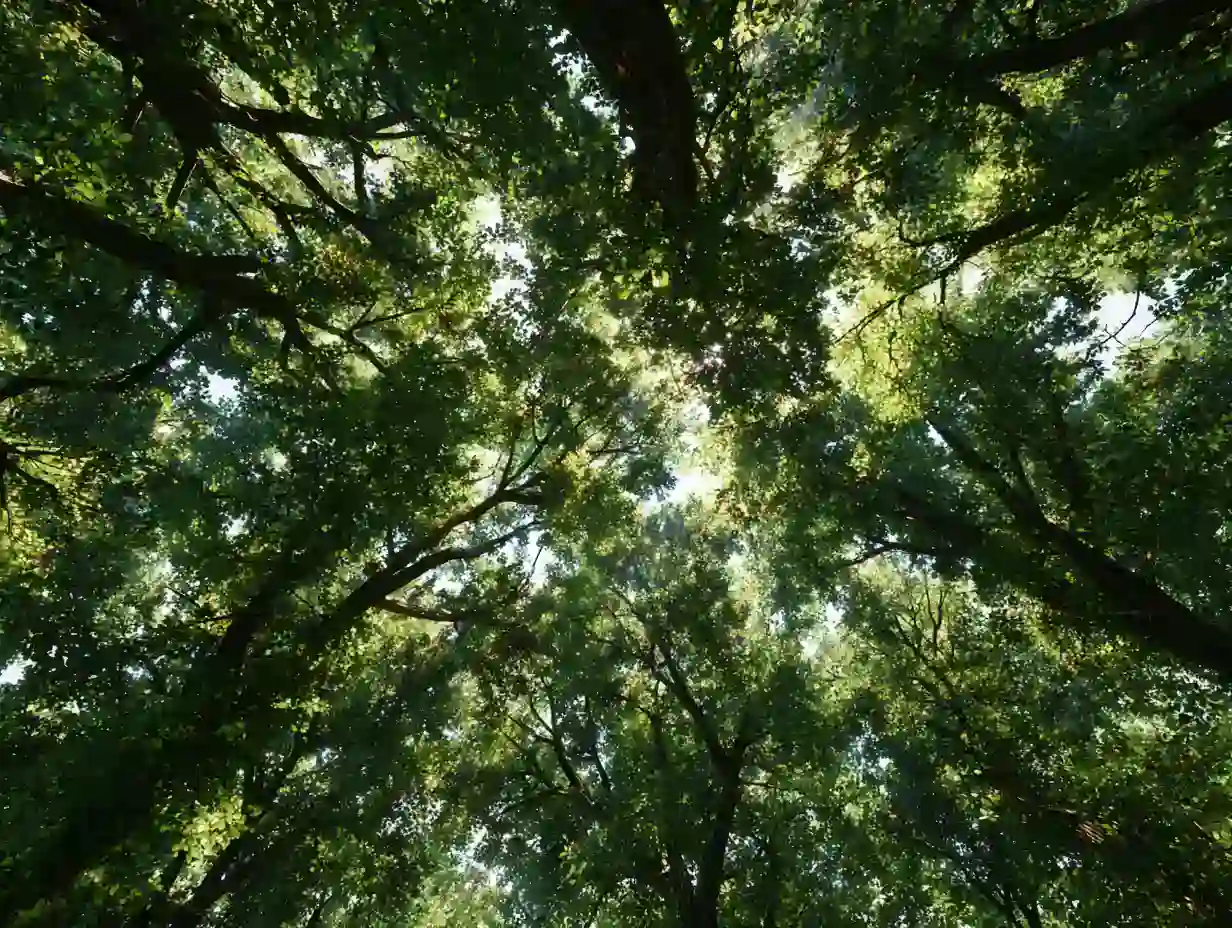

When a tree’s canopy becomes too dense, airflow is limited, moisture lingers longer than it should, and branches can take on extra stress. Over time, this can lead to uneven growth, health concerns, and a higher chance of branches breaking. Crown thinning helps by carefully removing select branches so light and air can move through the canopy more easily, supporting healthier growth while keeping the tree’s natural shape intact.
Join the Durham tree pruning experts from BroadLeaf Tree & Shrub as we explore advanced crown thinning techniques and how targeted pruning improves airflow for long term tree health.
Table of Contents
How Improved Airflow Supports Tree Vigor
Good airflow through a tree’s canopy does more than improve how it looks—it plays an important role in keeping the tree healthy and resilient. When branches and leaves become too crowded, moisture and shade build up inside the canopy, which can put ongoing stress on the tree.
Professional crown thinning helps open up that space in a controlled way, providing these benefits:
Helps Leaves and Branches Dry More Quickly
By opening up crowded areas within the canopy, crown thinning allows moisture from rain or irrigation to evaporate faster, reducing prolonged damp conditions that can affect tree health.
Allows Sunlight to Reach More of the Tree
Selective thinning lets light filter deeper into the canopy so more leaves can contribute to healthy growth instead of energy being concentrated only at the outer edges.
Reduces Stress from Wind and Storms
A less dense canopy allows wind to pass through more easily, lowering strain on major branches and improving a tree’s ability to withstand strong weather events.
Crown Thinning Techniques Used By Arborists
Effective crown thinning involves much more than cutting out a few obvious problem branches. Tree and shrub pruning professionals use a careful, informed approach that considers how a tree grows, how weight is distributed, and how pruning decisions will affect the tree years down the road.

Removing Branches that Compete with Each Other
When branches grow too close together, they end up competing for space, sunlight, and nutrients. Arborists look for these crowded areas and remove the weaker or poorly positioned branches, such as those growing inward or rubbing against others. This gives the remaining branches more room to grow stronger and healthier.
Paying Close Attention to How Branches Are Attached
Some tree branches are more likely to fail because of how they connect to the trunk or main limbs. Professionals know how to spot these weaker attachments and address them while leaving well-anchored branches in place. Over time, this helps improve the overall stability of the tree and lowers the risk of breakage during storms.
Keeping the Canopy Balanced from Top to Bottom
Rather than thinning one section of a tree too heavily, professionals spread pruning cuts evenly throughout the canopy. This helps the tree keep its natural shape and avoids putting too much stress on any one area. A balanced tree canopy also reduces the chance of excessive regrowth caused by over-pruning.
Adjusting Techniques Based on Tree Species
Not all trees respond to pruning in the same way, which is why species knowledge matters. Arborists adjust crown thinning methods based on the type of tree, its growth habits, and the time of year. This tailored approach helps support long-term tree health instead of causing unnecessary stress or decline.
Crown Thinning Versus Other Pruning Methods
Many property owners confuse crown thinning with other tree pruning techniques, which can lead to unintended damage if applied incorrectly. While each method has a purpose, using the wrong approach—or applying it incorrectly—can create long-term problems for a tree.
Crown cleaning focuses on removing branches that are dead, damaged, diseased, or broken. This helps improve safety and appearance, but it doesn’t significantly open up the canopy or improve airflow like crown thinning does. For that reason, crown cleaning is often done alongside crown thinning rather than used on its own.
Crown reduction shortens select branches to reduce a tree’s overall height or width. While useful in certain situations, this method changes the tree’s shape and must be done carefully to avoid stress. Crown thinning works differently by improving airflow and structure without noticeably changing the tree’s size.
Topping removes large portions of the canopy without regard for how the tree grows. This often leads to weak, fast-growing shoots and a higher risk of future branch failure. Because of these long-term risks, topping is strongly discouraged under professional tree pruning standards.
How Much Crown Thinning Is Too Much?
One of the most important parts of crown thinning is knowing how much is enough. Removing too much at once can stress a tree just as much as leaving it overcrowded.
Professional arborists typically limit crown thinning to about 20 to 30 percent of a tree’s live foliage during a single pruning cycle. This allows the canopy to open up while protecting the tree’s ability to produce energy.
Removing too many inner branches while leaving heavy growth at the ends creates a condition known as lion-tailing. This shifts weight outward and increases the chance of tree branch breakage. Proper crown thinning keeps foliage spread evenly along the branches.
Trees need time to adjust and recover after the pruning process. Spacing crown thinning over multiple seasons allows improvements to happen gradually without overwhelming the tree. This long-term, measured approach is a key part of responsible, professional tree care.
When to Use Crown Thinning to Prune Trees
Crown thinning is not appropriate for every tree or situation, but it offers clear benefits when applied strategically. Here are the best situations for applying the method of crown thinning:

- Mature Trees with Dense Canopies: Older trees often develop congested interior growth that restricts airflow. Thinning helps restore internal function without altering character.
- Trees Exposed to High Winds: Properties with open exposure benefit from reduced wind resistance through selective thinning.
- Trees Showing Signs of Fungal Pressure: Improved airflow can reduce environmental conditions that favor certain tree diseases.
- Landscape Trees Requiring Long-Term Stability: Crown thinning supports balanced growth, reducing the need for reactive pruning after storms.
Why Professional Crown Thinning Matters For Long-Term Tree Health
Crown thinning is a precision practice that requires training, experience, and an understanding of tree structure. Improper cuts, over-thinning, or species-inappropriate pruning can shorten a tree’s lifespan rather than extend it.
At BroadLeaf Tree & Shrub, crown thinning is approached as part of a broader tree health strategy. Each tree is evaluated individually, with pruning decisions based on structure, species, site conditions, and long-term goals rather than one-size-fits-all solutions.

Request A Professional Crown Thinning Evaluation
If your trees appear dense, stressed, or vulnerable to wind damage, crown thinning may be an effective solution for your property. BroadLeaf Tree & Shrub provides detailed evaluations, professional tree and shrub pruning, and tree removal services, with clear recommendations tailored to your landscape.
To get started, submit a request through our contact form below to schedule a consultation in Durham, Raleigh, or nearby communities in Wake County.