Urban trees face unique challenges. Limited root space, compacted soil, air pollution, and heat stress all weaken a tree’s natural defenses. When trees are already under pressure, tree pests are more likely to take hold, and once they do, the damage can escalate quickly if it isn’t addressed correctly.
At Broadleaf Tree & Shrub, our Durham tree service experts have seen firsthand how urban property owners have trees succumb to pest infestations when underlying stress goes untreated. That’s why we aim to help local homeowners recognize early warning signs of tree pests and learn how natural control methods can protect trees without relying on harsh treatments.

Table of Contents
Why Tree Pests Are a Bigger Problem in Urban Landscapes
Trees growing in urban locations face ongoing stress that weakens their natural defenses. Limited space to grow and increased human activity create conditions that make it more likely for tree pests to establish and spread.
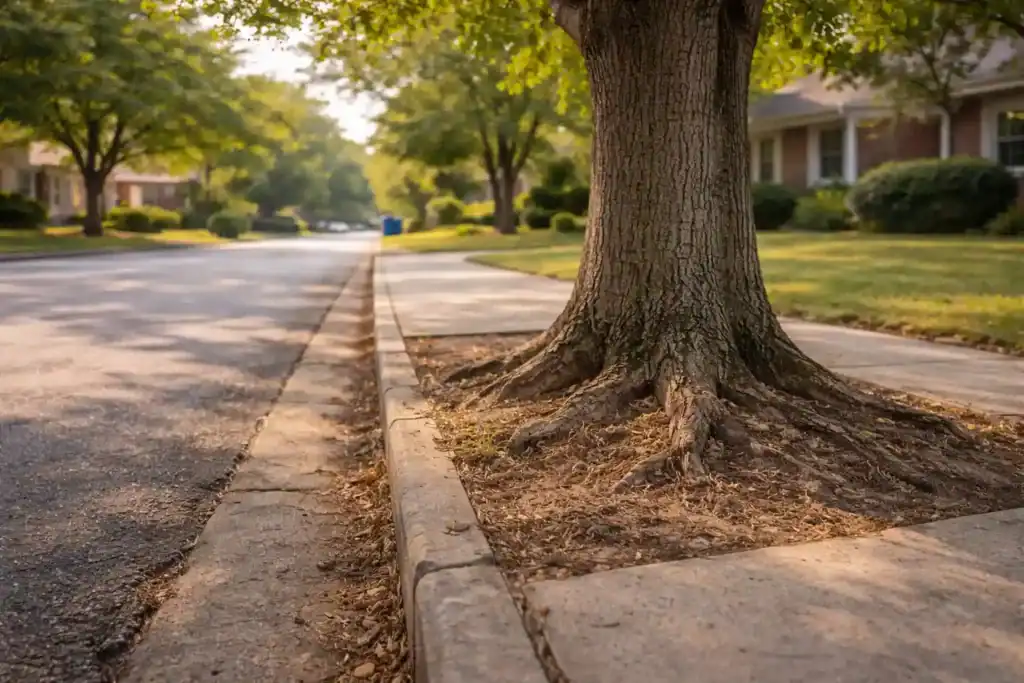
Common urban stressors include:
- Compacted soils that restrict proper root development
- Limited soil volume around sidewalks, roads, and buildings
- Root disturbance from construction and utility work
- Heat retention and reduced airflow from surrounding pavement and structures
Common Tree Pests Found in Urban Areas
In urban landscapes, tree pests often emerge where growing conditions are already compromised. Knowing which pests are most common allows for earlier intervention and more effective long-term pest management.
Aphids
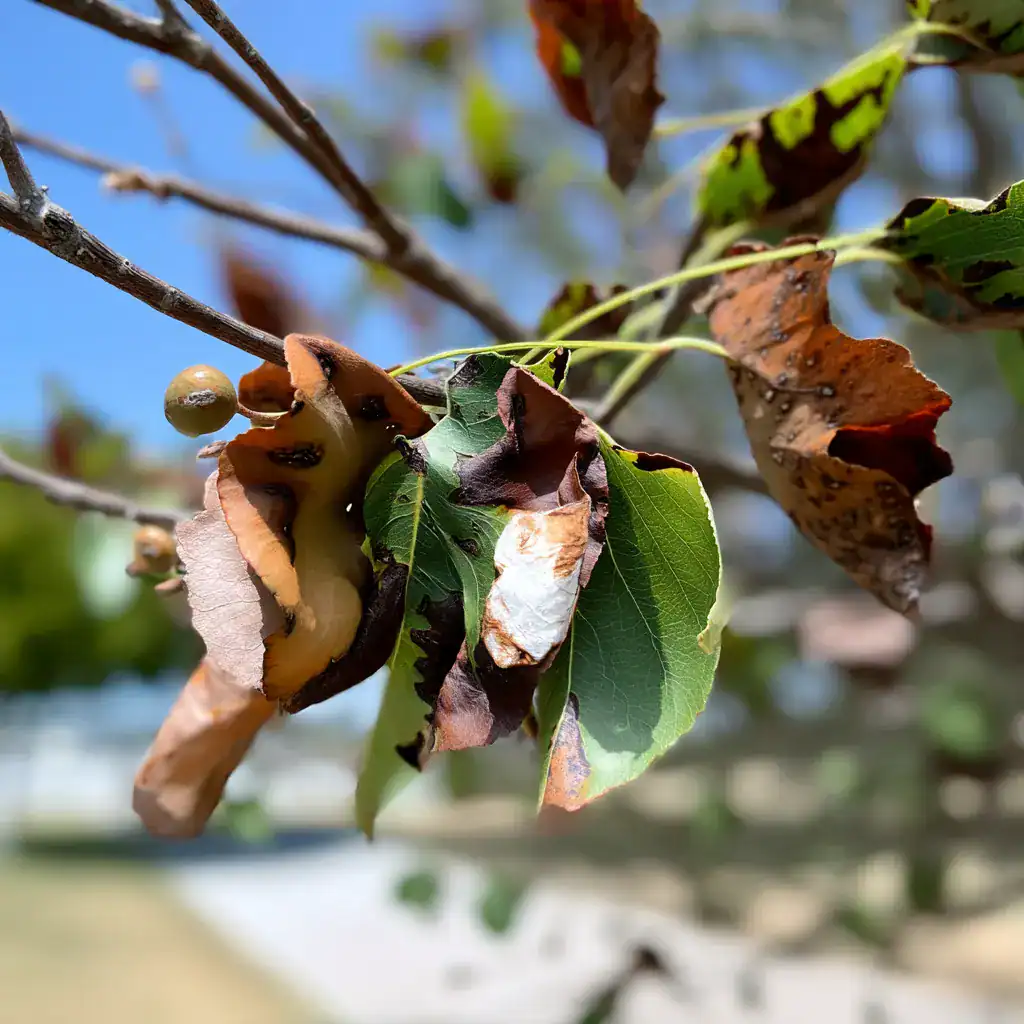
Aphids are small, soft-bodied insects that feed on tree sap, often clustering on new growth and the undersides of leaves. While aphids rarely kill mature trees outright, heavy infestations weaken their growth and make the trees more vulnerable to other, secondary problems.
Common signs include:
- Curling or distorted leaves
- Sticky residue (honeydew) on leaves, cars, or sidewalks
- Increased ant activity around the tree


Borers
Borers are insects whose larvae tunnel into trunks or branches, disrupting the tree’s vascular system. They typically target stressed or declining trees, making early intervention especially important.
Warning signs include:
- Small exit holes in bark
- Sawdust-like material near the base of the tree
- Thinning canopy or sudden branch dieback
Scale Insects
Scale insects attach themselves to bark, twigs, or leaves and feed quietly over long periods, often going unnoticed until damage is advanced. Because scale insects are protected by a waxy coating, improper treatment often fails without a targeted approach.
Look for:
- Raised, shell-like bumps on branches
- Yellowing foliage
- Reduced vigor over multiple seasons


Caterpillars
Leaf-feeding caterpillars can defoliate trees quickly, especially during outbreak years. Certain species, including gypsy moth caterpillars, are capable of stripping large sections of foliage in a short period of time. While healthy trees can recover from occasional defoliation, repeated feeding weakens a tree’s long-term health and reduces energy reserves. It can also increase the trees susceptibility to other pests as well as tree and shrub diseases.
Common indicators include:
- Chewed or missing leaves
- Silk webbing in branches
- Droppings beneath the canopy
Bark Beetles
Bark beetles are small insects that tunnel beneath the tree bark and disrupt water and nutrient accumulation. Infestations often progress quickly once established, especially in already stressed trees.
Indicators include:
- Tiny holes in the bark
- Sawdust or frass around the trunk
- Sudden needle or leaf discoloration


Hemlock Woolly Adelgid
This sap-sucking insect specifically targets hemlock trees and spreads quietly over time. Without early pest management, infestations can result in significant tree loss and the potential need for tree removal.
Look for:
- White, cotton-like masses along the undersides of branches
- Needle drop and thinning foliage
- Gradual decline over multiple growing seasons
Periodical Cicadas
While not typically fatal to mature trees, periodical cicadas can cause damage during years when populations surge. Young and newly planted trees are most vulnerable during pest emergence cycles.
Common signs include:
- Slits or scarring along small branches
- Loss of new twig growth at the ends of branches
- Broken or weakened new growth

Natural Control Methods That Address Tree Pests at the Source
Natural control methods focus on correcting the underlying issues that allow tree pests to establish and spread.
Rather than relying on surface-level treatments, this approach:
- Strengthens tree defenses
- Reduces environmental stress
- Creates long-term resistance to insect and diseases
Integrated Pest Management is a practical, step-by-step approach to dealing with tree pests based on what’s actually happening with the tree, not a preset treatment schedule. The trees are monitored over time so pest activity can be identified early, correctly diagnosed, and addressed before damage escalates.
Instead of applying broad treatments by default, IPM focuses on using the least disruptive option needed at the right time. This helps protect beneficial insects while keeping pest pressure under control.
In urban settings, pest issues tend to follow a disease rather than appearing on their own. When trees struggle with poor airflow, lingering moisture, or unaddressed damage, insects are more likely to move in and take advantage of weakened tissue.
Focus on overall tree health through proper tree pruning, moisture management, and early correction of structural problems. This helps reduce disease pressure and lowers the likelihood of additional pest activity.
Urban trees do not usually grow in ideal soil conditions. Compaction, limited soil volume, and disrupted roots can make it difficult for trees to access the nutrients they need to stay resilient.
By evaluating soil conditions and correcting specific deficiencies (rather than applying generic fertilizers), trees receive balanced support that promotes steady growth, stronger roots, and improved resistance to tree pests without encouraging excess, vulnerable growth.
Benefits of Plant Health Care for Preventing Tree Pests

Plant Health Care targets pest and disease prevention while promoting long-term tree stability.
The benefits include:
- Strengthening natural tree defenses by reducing stress and supporting steady growth
- Identifying pest activity early through monitoring before visible damage occurs
- Reducing reliance on reactive pest treatments that fail to address underlying issues
- Improving root health and soil conditions that directly influence pest resistance
- Helping prevent secondary pests and diseases that often follow initial infestations
- Extending the lifespan of mature trees by maintaining long-term health and stability
Schedule Your Tree Pest Prevention Service Today
Managing tree pests effectively means looking beyond visible insects and addressing the conditions that allow infestations to thrive. If you’re concerned about pests affecting your trees, the next step is a professional evaluation.
At Broadleaf Tree & Shrub, we diagnose and treat pests and diseases so your landscape can thrive season after season. Contact us today to learn more or schedule a consultation by filling out our contact form below.