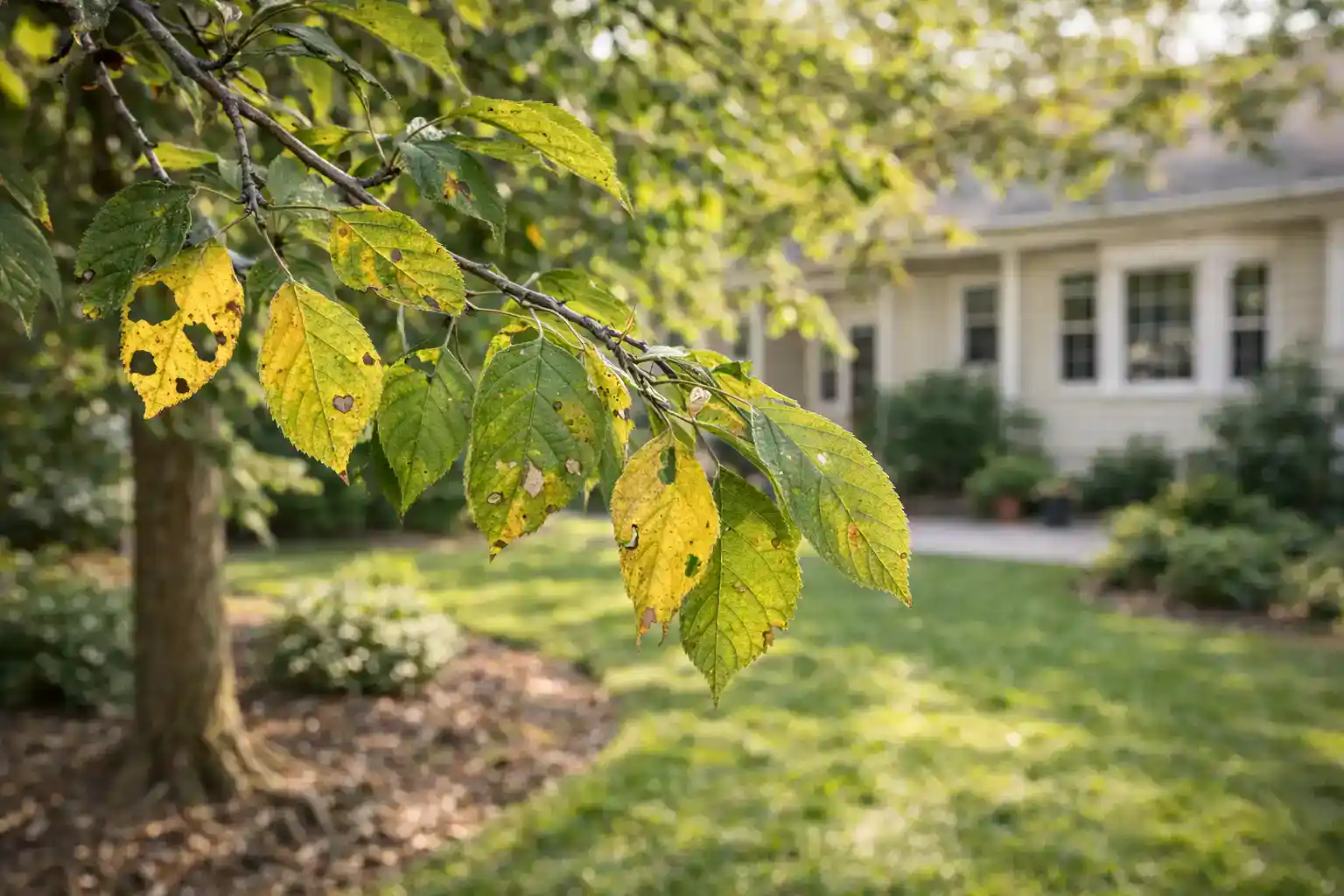
If you’ve invested time and money into your trees and shrubs, winter can be a stressful season. A hard freeze, drying winds, sudden temperature swings, or hungry wildlife can all cause damage that isn’t always obvious right away. Once the tree bark is stripped or evergreen foliage turns brown, you can’t reverse it.
That’s why winter tree protection is so important. Join the tree and shrub experts from BroadLeaf Tree & Shrub for smart, protective measures that go a long way.
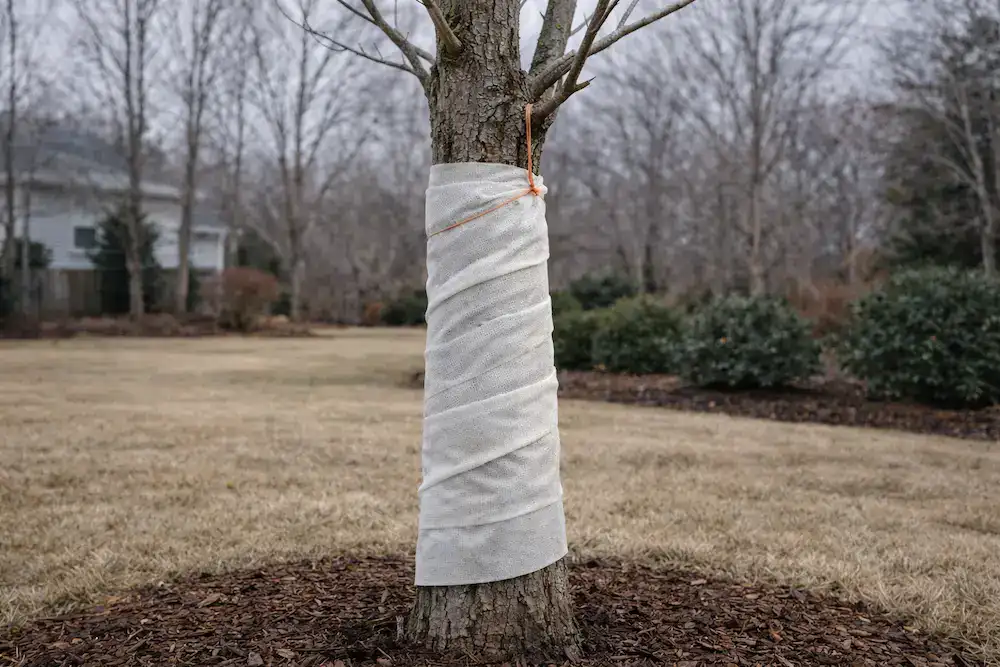
Table of Contents
What Causes Winter Tree Damage?
The most common causes of winter tree damage are:
- Freeze-thaw temperature swings that split bark and cause frost cracking
- Winter sun exposure (especially on thin-barked trees), leading to sunscald
- Drying winds and moisture loss that trigger winter burn and needle/leaf browning on evergreens
- Frozen or unstable soil conditions that stress roots and can cause heaving/root injury
- Heavy snow and ice loads that bend, crack, or break limbs
- Wildlife pressure (deer browsing/buck rubs, rabbit and vole chewing) that strips bark and damages young trees
Signs Your Trees Are Prone to Damage
Your tree is high-risk if it is:
- Newly planted, especially within the last 1–3 years
- A thin-barked species, which are common in many landscape trees
- Located in an open, windy area
- Close to woods (aka “deer country”)
- A broadleaf evergreen tree, like holly or rhododendron
Red flags indicating your trees have become compromised:
- Brown foliage on evergreens, especially wind-facing sides
- Vertical cracks or peeling bark
- Bare twigs where deer browsed buds
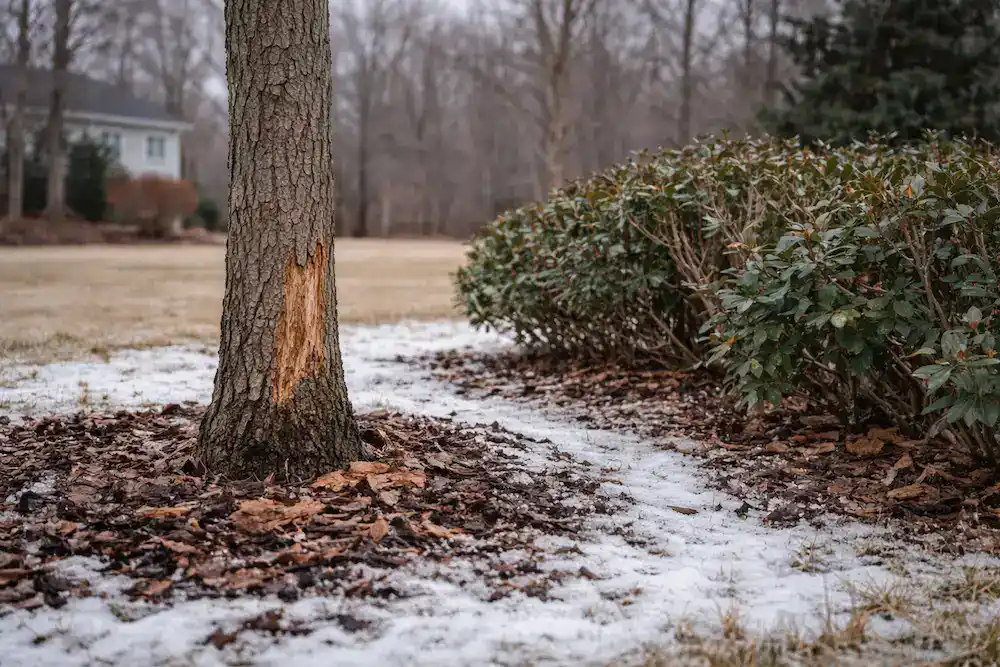
Bark is missing near the base of the trunk
Step by Step Winter Tree Protection Plan
This step-by-step plan is designed to help you protect the parts of your trees that are most vulnerable in winter. While you can handle many of these tasks yourself, a professional in tree and plant health care can help you choose the right materials and setup for your landscape.
Step #1: Wrap or Guard the Trunk
Before you mulch or build wind barriers, start at the trunk. That’s the “lifeline” of the tree and it’s what wildlife targets first.
Wrapping the tree trunk protects against:
- Sunscald and frost cracking
- Chewing from rabbits and rodents
- General winter stress on thin bark
Good material options include:
- Paper-based commercial tree wrap
- Corrugated plastic tree guards
- Hardware cloth
To wrap tree trunks the right way:
- Wrap from the base up to the lowest branches
- Keep the wrap snug but not suffocating
- Avoid trapping moisture against the bark of the tree
- Remove wraps in spring to prevent pests and disease issues
#2: Mulch for Root Insulation
Mulch is one of the simplest, most effective winter protection tools, and it’s often the most misunderstood.
A proper mulch ring:
- Insulates tree roots from harsh temperature swings
- Prevents soil from shifting around roots
- Retains soil moisture
- Reduces stress going into spring
Most trees do well with:
- 2-4 inches of mulch across the root zone
- Kept several inches away from the trunk
Common mulching mistakes to avoid:
- Mulch piled against the trunk of the tree
- Over-mulching thick enough to hold excess moisture
- Using loose leaf piles right against shrubs where rodents hide
Step #3: Shield Evergreens from Wind and Winter Burn
Winter burn is a big problem for trees exposed to winter frost, especially for evergreen shrubs and broadleaf evergreens. Even though it’s cold, evergreens still lose moisture. When the ground is frozen, roots can’t replace the lost moisture fast enough. The result is often brown foliage, dried-out tips, and stressed plants that struggle well into the spring season.
To shield evergreens, use burlap barriers that do not fully enclose the tree.
A basic burlap barrier will:
- Block harsh winds
- Reduce sun exposure on bright winter afternoons
- Allow airflow
Install barriers:
- After the first hard frost
- Before severe cold or heavy wind patterns start
Remove them:
- When spring temperatures stabilize
Step #4: Prevent Wildlife Damage
When food is limited, your landscape becomes a winter buffet for the animals nearby.
Common wildlife damage in winter are often caused by:
When food is limited, your landscape becomes a winter buffet for the animals nearby.
Common wildlife damage in winter are often caused by:
- Deer browsing: buds and twig tips eaten off
- Buck rubbing: shredded bark on trunks
- Rabbit chewing: bark removed in strips
- Vole damage: bark girdling near the base under snow
Physical barriers are the most reliable way to combat these winter culprits for best results.

Options include:
- Trunk guards or wraps
- Hardware cloth cylinders around trunks
- Temporary fencing for deer-heavy yards
Sometimes, deterrents like sprays can help homeowners protect their trees and shrubs, but usually only when used consistently.
Winter Tree Protection FAQs
Do I need winter tree protection every year?
Not always. Mature, well-established trees usually handle winter better. But young trees, recently planted shrubs, and exposed evergreens often need seasonal protection, especially in windy or wildlife-heavy areas.
When should I wrap my trees for winter?
Most homeowners should wrap trees in late fall (typically November to early December), after leaf drop and before deep freezes. The goal is to prevent sunscald, frost cracking, and chewing damage during the harshest winter stretch, which is usually January-February.
Is mulching enough to protect trees in winter?
Mulching helps a lot, especially for roots, but it doesn’t stop bark damage, deer browsing, or wind desiccation. For complete winter tree protection, it’s best to combine mulching, trunk guarding, and wind protection when needed.
Should I prune trees before winter?
Light structural tree pruning may be appropriate, but heavy pruning right before winter can increase stress and exposure. If you’re unsure, it’s worth scheduling a professional consultation so cuts support long-term health.
Can deer really kill a tree in winter?
Yes. Deer browsing can severely weaken young trees, and rubbing can strip bark. If the trunk becomes girdled, the tree may not recover.
Protect Your Trees This Winter with Expert Care In The Triangle
A lot of winter tree damage is preventable, but it’s also easy to miss until spring makes it obvious. Our team at BroadLeaf Tree & Shrub can evaluate your trees, identify weak points, and recommend the right mix of wrapping, mulching, and other winter tree protection strategies for your property.
Fill out the form below to request a consultation in Durham, Apex, Chapel Hill, Cary, or the surrounding area.