Quick answer: The best time to prune most deciduous trees is late winter to early spring, while the tree is still dormant and before new growth begins. Oaks and elms are the exception, since they should only be pruned between mid-October and mid-April to avoid attracting the beetles that spread oak wilt and Dutch elm disease. Spring-flowering trees and shrubs get pruned right after their blooms fade, not during the dormant season, and dead, diseased, or storm-damaged branches can come off any time of year, regardless of the calendar.
Table of Contents
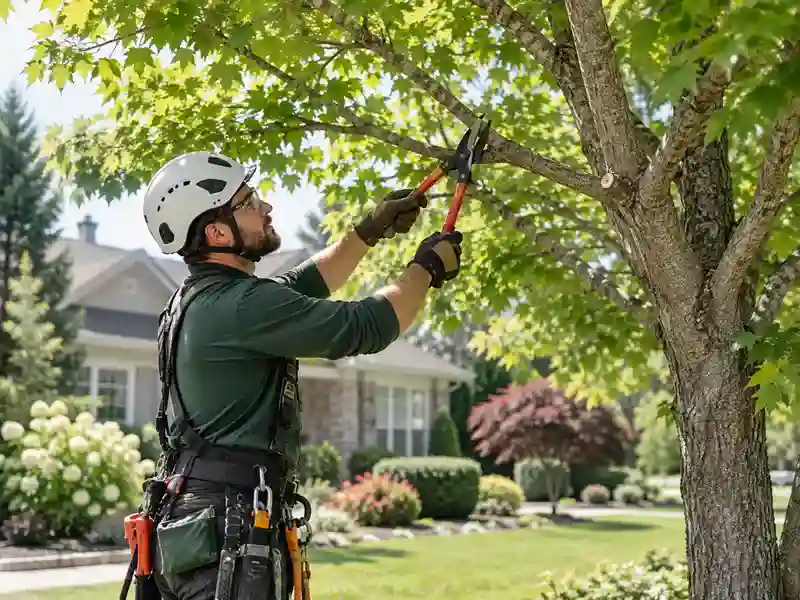
Timing matters more in tree pruning than most homeowners realize. Prune at the wrong point in a tree’s life, and it’s possible to trigger disease, lose next year’s flower display, or add stress to a tree that’s already working hard to recover from drought or summer heat. Prune at the right time, and the tree heals faster, pushes out healthy new growth, and holds its natural shape for years without much corrective work.
At BroadLeaf Tree & Shrub, our certified arborists field this question on nearly every property visit across Durham, Raleigh, and the greater Triangle: when is it actually safe to prune trees? Here’s what the calendar looks like, species by species.
What Month Is Best for Trimming Trees?
For most deciduous trees, late winter through early spring, roughly January through March in the Triangle, is the best time to prune trees. The branch structure is easy to see without leaves in the way, and fresh pruning cuts have time to begin healing before spring growth begins. That general rule covers most shade trees, but a few species run on their own calendar.
Tree Type | Best Pruning Window | Why |
|---|---|---|
Most deciduous shade trees (maple, sweetgum, hickory) | Late fall through early spring, during the dormant season | Branch structure is visible; cuts close before spring growth begins |
Oak trees | Mid-October through mid-April only | Avoids oak wilt risk during active beetle season |
Elms | Dormant season only | Avoids spreading Dutch elm disease |
Fruit trees | Late winter, before buds swell | Encourages strong structure and better fruit set |
Spring-flowering trees and shrubs (dogwood, azalea, forsythia) | Immediately after blooms fade | Pruning in winter removes next year’s flower buds |
Summer-flowering shrubs (crape myrtle, rose of Sharon) | Late winter to early spring | Buds form on new growth, so dormant pruning doesn’t cost blooms |
Evergreen trees | Late winter, before new growth starts | Light pruning only; avoid cutting into old wood |
Maples and birches | Early to mid-summer | Pruning these “bleeder” species in late winter causes heavy sap flow |
Why Timing Matters: The Risks of Pruning at the Wrong Time
Pruning outside a tree’s ideal window isn’t just a matter of convenience. It carries real risk, and some of it doesn’t show up right away.

Pruning oaks between April and October raises the risk of oak wilt, since the beetles that spread the fungus are most active during the growing season and are drawn to fresh cuts.
Cutting during active growth in late spring or early summer can attract other pests and disease to an open wound before the tree forms callus tissue over it.
Fall pruning encourages tender new growth that doesn’t have time to harden off before cold weather arrives, leaving it vulnerable to frost.
Pruning maples, birches, and other bleeder species in late winter or early spring can cause excessive sap flow. It looks dramatic, usually isn’t harmful on its own, but is still worth avoiding with heavier cuts.
Heavy pruning during a late-summer heatwave can stress trees significantly, especially ones already dealing with drought. That stress doesn’t always surface immediately. A tree can make it through one growing season under strain, only for the compounding effect to show up the following year as dieback or decline.
That last point is one we see play out locally almost every summer: drought stress doesn’t reset when the rain comes back. It carries into the next season, which is exactly why proactive tree health, not just reactive pruning, matters for a tree’s long-term outlook.
What Are the Five Rules of Pruning?
Professional pruning generally follows five core rules, no matter the season or the tree:
Preserve the branch collar, the slightly raised area where a branch meets the trunk or a larger limb. Cutting flush against the trunk and removing the branch collar is one of the most common mistakes homeowners make, and it slows healing significantly.
Remove dead, diseased, or damaged branches first. These come off any time of year, regardless of the general pruning calendar.
Avoid removing more than about 25 percent of a tree’s live canopy in one session, even on a young tree that can otherwise handle corrective pruning well.
Cut in the right place and at the right angle, just outside the branch collar, never flush with the trunk and never leaving a stub.
Prune with a clear purpose, whether that’s improving airflow, removing crossing branches or crossing limbs, shaping a young tree, or addressing a specific safety hazard, rather than trimming for its own sake.
What Is the 1-2-3 Rule for Pruning Trees?

The 1-2-3 rule, more formally called the three-cut method, is how arborists remove large branches without tearing bark down the trunk. It works like this: an undercut (or notch) a few inches out from the final cut point keeps the branch from tearing bark as it falls, a second cut above that notch removes most of the branch’s weight, and a final cut just outside the branch collar lets the wound close and heal properly.
Skipping straight to one big cut on a large branch almost always rips bark along the trunk, leaving an entry point for decay and insects that’s slower to close. The method applies whether it’s one branch or several, and it’s one of the easiest ways to tell a professional pruning job from a rushed one.
Common Mistakes When Pruning Trees
Topping a tree instead of making targeted cuts. This removes too much canopy at once and tends to trigger weak water sprouts rather than a strong new growing point.
Cutting flush with the trunk or leaving a stub. Both interfere with wound closure and give decay an easy way in.
Using dull tools, which crush tissue instead of cutting cleanly and slows the healing process.
Ignoring the general rule for the species. Pruning an oak in July, or cutting a spring-flowering shrub in February, usually costs that year’s flower display and sometimes more.
Doing all the corrective pruning a mature tree needs in a single pass, rather than spreading structural changes across a few seasons.
Expert Tips for Pruning Success
Light pruning is almost always the safer call. If you’re unsure whether a cut is necessary, it’s usually fine to leave it for the following season.
Clean your tools between cuts, especially on a tree you suspect is diseased, to avoid spreading it to healthy wood.
Call a certified arborist for large branches, anything near power lines, or significant old wood on a mature tree. The risk of a fall or a bad cut isn’t worth the savings on a weekend project.
If a tree’s overall health has been declining for more than one growing season, pruning alone may not fix it. An arborist can tell you whether the issue is something pruning corrects, or whether it’s a sign the tree needs plant health care first.
When to Prune Regardless of Season
Dead wood, diseased branches, and storm damage don’t wait for the dormant season, and neither should a property owner. A dead or diseased branch can spread decay or pests the longer it stays attached, and a branch that’s cracked, hanging, or resting on a power line after a storm is a safety hazard that needs attention immediately, not on next winter’s schedule. The seasonal guidance above is for planned, corrective pruning. Removing dead branches to reduce stress on the rest of the tree is its own category, and it’s always in season.

Frequently Asked Questions
What month is best for trimming trees?
Late winter into early spring, typically January through March in the Triangle, is best for most deciduous trees. Oaks and elms should only be pruned from mid-October through mid-April, and spring-flowering trees and shrubs are pruned right after they bloom instead.
What are the five rules of pruning?
Preserve the branch collar, remove dead or diseased wood any time, avoid taking more than about a quarter of the live canopy at once, cut just outside the branch collar rather than flush with the trunk, and prune with a specific purpose in mind.
What are the most common mistakes when pruning trees?
Topping, flush cuts that remove the branch collar, dull tools, pruning the wrong species at the wrong time of year, and trying to do several years of corrective work in one visit.
What is the 1-2-3 rule for pruning trees?
It’s the three-cut method for removing large branches: a notch cut, a relief cut above it, and a final cut at the branch collar. It prevents the branch’s weight from tearing bark down the trunk as it falls.
Can I prune my own trees, or should I call a professional?
Light pruning on small branches within reach of the ground is usually fine to do yourself. Anything involving a ladder, a large branch, power lines, or a tree you’re not sure is healthy is worth a call to a certified arborist, since a bad cut or a fall is a more expensive problem than the service call.
Request Expert Tree Pruning and Shaping for Your Home or Business
Getting the timing right protects a tree’s long-term health, and getting the cuts right protects it just as much. If you’re not sure whether now is the right time to prune trees on your property, or a branch looks like more of a safety hazard than a DIY job, BroadLeaf Tree & Shrub’s certified arborists serve Durham, Raleigh, Morrisville, Apex, Cary, Hillsborough, Chapel Hill and the surrounding Triangle. Call 919-632-3565 or request a consultation through the form below before you make the first cut.