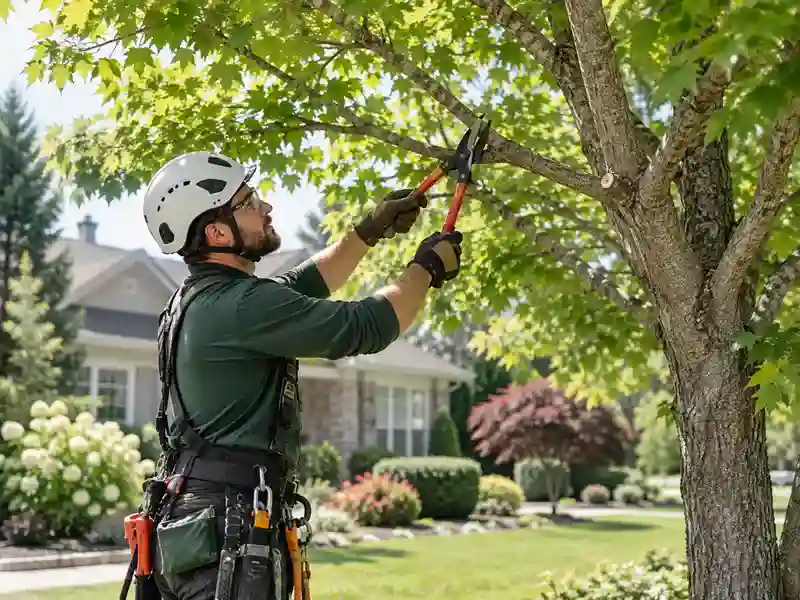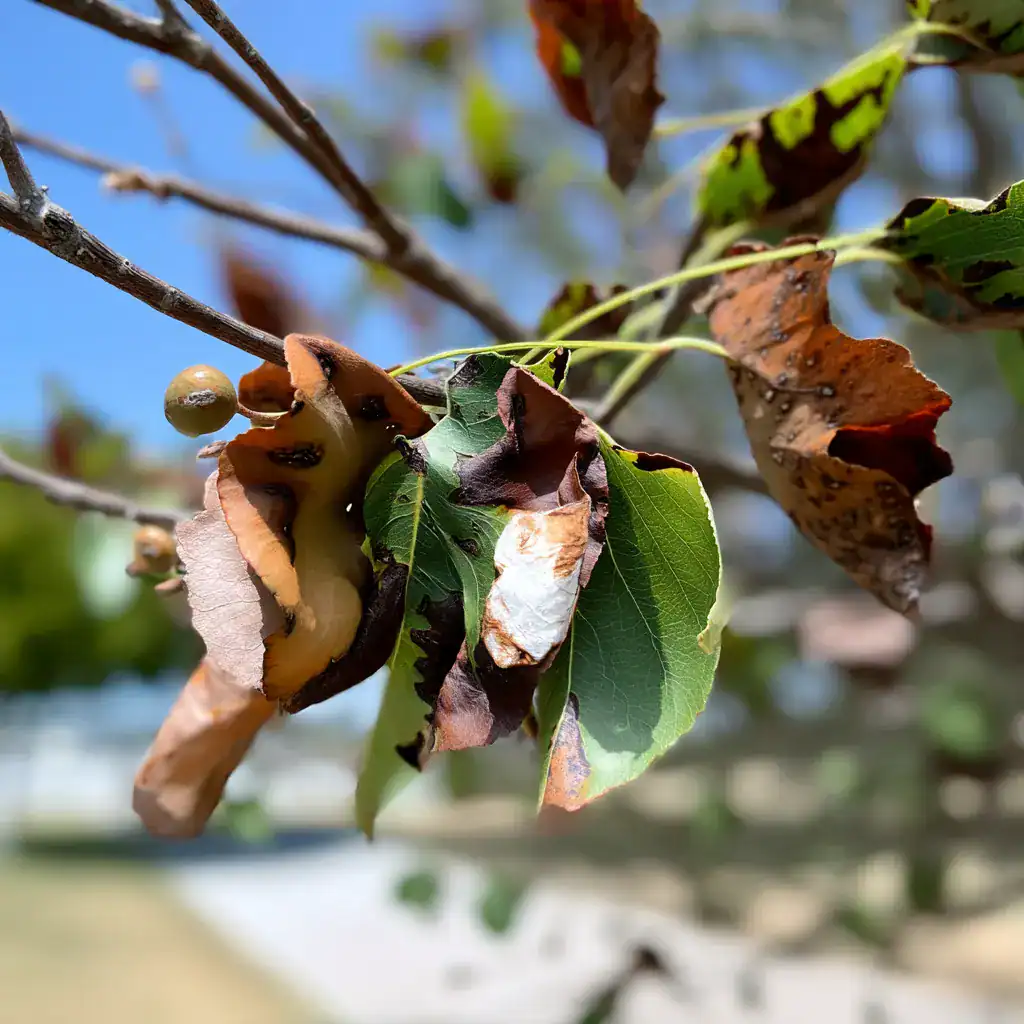
A struggling tree may not need to be removed. Although a tree can look unhealthy on the surface, it’s often a sign of stress that’s reversible when it’s caught early. At BroadLeaf Tree & Shrub, our certified arborists walk Triangle-area properties nearly every day, and the same question comes up on almost every visit: is this tree a plant health care case, or does it need to come down?
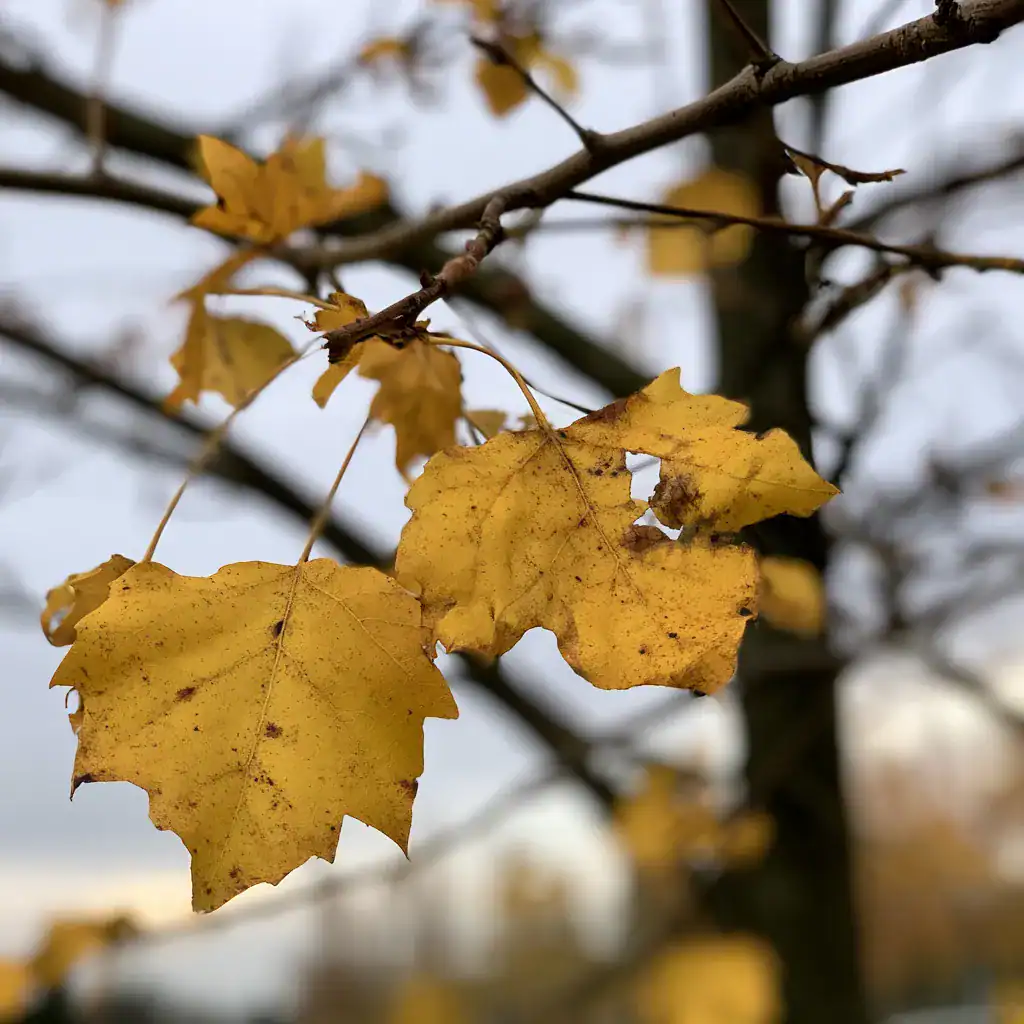
The honest truth is, you usually can’t tell just by looking from the porch. A tree with thin, yellowing leaves might recover fully with a season of root-zone care and targeted treatment, while a tree that still looks mostly green from a distance could already have compromised roots and be closer to failure than it appears. Getting this right starts with an accurate diagnosis rather than a guess, which is why plant health care begins with evaluating the whole tree instead of treating whatever symptom happens to be easiest to see.
Table of Contents
How Can You Tell if a Tree Needs Plant Health Care or Removal?
Two questions really drive the decision: can the tree recover, and can it stay structurally safe while it does? These are related, but they aren’t the same measure. A tree can be diseased or nutrient-deficient and still be structurally sound enough to treat, just as a tree can look fine above ground while its root system has already failed underneath. That’s why a proper assessment weighs both the tree’s biology and its structural integrity, rather than relying on how the canopy looks from the yard.

Signs Plant Health Care May Be the Better Option
Many stressed trees still have plenty of living tissue and a sound structure holding them up. In our experience, these symptoms usually point toward diagnosis and treatment rather than removal:
- Leaves that are yellowing, spotted, curling, or dropping earlier than expected
- Gradual canopy thinning while most of the tree remains alive
- Insect activity or visible pest damage on leaves and branches
- Limited dieback confined to a few branches rather than the whole canopy
- Poor growth linked to compacted soil or root-zone stress
- Drought or heat stress following a hot, dry stretch
- Nutrient deficiencies showing up as pale or undersized leaves
- A disease still in its early stages that hasn’t reached the trunk
A tree can often look worse before it gets better. Heavy insect feeding, for example, can leave a canopy thin and ragged, but treating the underlying infestation through professional pest management, along with easing other sources of stress, can give the tree a real chance to recover its fullness over the following one to two growing seasons.
Signs Tree Removal May Be Necessary
Removal tends to become the more likely answer once the concern moves beyond plant health and into structural failure. That shift changes the calculation entirely, since no treatment can restore compromised wood or a failed root system. Warning signs include:
- A tree that is completely dead or in advanced decline
- Major trunk decay or large cavities affecting structural wood
- Severe cracks or splits running through the trunk
- Significant root damage or visible root-plate movement
- A new lean, especially one that appeared suddenly or after a storm
- Extensive canopy loss that leaves the tree badly unbalanced
- Failure of large limbs or multiple leaders
- A hazardous location near a home, driveway, sidewalk, utility line, or an area people use often
Dead and dying trees, along with trees that pose an unacceptable safety risk, typically need to come down. Structural damage can make a tree unsafe well before it actually falls, particularly during the high winds and heavy rain that come with Triangle-area storms.
A Quick Self-Check Before You Call
Not every symptom calls for an emergency visit, and not every issue can wait until the next slow season. Use this as a rough guide for how quickly to act, then confirm with a professional assessment before making a final call.
Mild yellowing on a few leaves, minor pest activity on an otherwise full canopy, or slightly slower growth after a dry summer usually falls into this category. It’s worth keeping an eye on and mentioning at your next scheduled visit.
Thinning that’s spreading across the canopy, dieback on more than one or two branches, or a tree that hasn’t looked right for more than one growing season deserves a professional look before the underlying cause has a chance to spread or worsen.
A new lean, a split or cracked trunk, mushrooms or fungal conks at the base, soil heaving near the root flare, or any large dead limb hanging over a driveway, roof, or walkway should be treated as urgent. These can be signs that the tree is close to failure.
What Is Plant Health Care, and When Can It Save a Tree?
Plant health care looks at the tree as a whole system rather than treating one visible symptom in isolation. It always starts with diagnosis. Our Durham-based arborists evaluate a tree’s overall condition, including its growing environment, and build a plan that may include pest or disease treatment, soil and root-zone care, fertilization, and ongoing monitoring.
Some of the most serious tree problems start below ground, where you can’t see them. The dense red clay common to Triangle-area properties compacts easily and drains poorly, and construction activity, foot traffic, buried root flares, and excess mulch can all add to the strain.
Plant health care may involve improving root-zone conditions, correcting mulch depth, addressing soil compaction, adjusting a watering schedule, or building a nutrient plan around the tree’s actual deficiencies. Fertilizer alone isn’t usually the whole answer, since poor leaf color, undersized leaves, and early leaf drop can just as easily point to a root problem that fertilizer won’t fix on its own.
Pests and diseases are common causes of decline, especially when they go untreated for a season or two. Locally, we see recurring issues with anthracnose, fire blight, scale insects, spider mites, bagworms, and emerald ash borer.
Because these symptoms often overlap, leaf loss can come from insects, disease, drought, root stress, or some combination of the four, so getting an accurate diagnosis matters more than treating whatever symptom is most obvious. Treating the wrong problem wastes time the tree may not have.
What Happens During a BroadLeaf Arborist Assessment
A tree assessment is more than a quick glance from the curb. When one of our certified arborists visits a property, the process typically includes:
- A visual review of the crown, checking canopy density, dieback, and leaf color from multiple angles
- An inspection of the trunk and root flare for cracks, cavities, included bark, or fungal growth
- A check of the soil and root zone, including mulch depth, compaction, and drainage
- Questions about the tree’s history, including recent construction, grading, storm damage, or watering changes nearby
- In some cases, tools such as a resistance drill or sounding mallet to check for hidden internal decay
That combination of visible evidence and tree history is what separates a real diagnosis from a guess, and it’s the difference between recommending treatment that’ll actually work and recommending removal that isn’t necessary.
Can Tree Pruning Prevent the Need for Removal?

Sometimes the problem is concentrated in one part of an otherwise healthy tree, and in those cases, tree pruning may solve the issue without touching the rest of the tree.
Removing dead, damaged, diseased, or poorly attached branches can reduce specific hazards without sacrificing the whole tree. Pruning can also be the right call after limited storm damage, as long as the main trunk, root system, and enough of the canopy are still intact and healthy.
BroadLeaf provides professional tree pruning in the greater Durham area as part of a broader approach to keeping trees on your property when removal isn’t necessary.
When Is Tree Removal the Safer Choice?
There are situations where trying to preserve a tree just doesn’t offer much benefit compared with the risk it carries.
A dead tree can’t recover, and severely compromised structural wood can’t be restored through fertilizer, pest treatment, or pruning. A tree with major root failure may still have green leaves overhead, yet no longer have the anchoring system it needs to stay upright. After a storm, a lifted root plate, a severely split trunk, or extensive canopy loss can point to structural failure even in a tree that still looks partly alive.
Location changes the level of concern too. A declining tree in an open wooded area is a very different situation from one leaning over a bedroom, driveway, play area, neighboring property, or a sidewalk people use every day.

For trees that can’t be kept safely, BroadLeaf Tree and Shrub provides tree removal services built around minimizing disruption to nearby structures and landscaping. We start by assessing the tree itself, its surroundings, and the safest way to bring it down.
Can Plant Health Care Help Prevent Future Tree Removal?
Plant health care can reduce some of the conditions that lead to premature decline, particularly when problems are caught before they become severe.
Regular observation makes changes easier to catch early. A thinning crown, unusual leaf color, new fungal growth, boring-insect holes, dead branches, or changes around the root zone are far easier to address while the tree still has the capacity to respond to treatment.

It’s also worth remembering that most tree problems aren’t caused by a single issue. A tree might deal with years of compacted soil, then a dry summer, then an insect infestation that finally pushes it into visible decline. Improving the tree’s growing conditions can matter just as much as treating whatever pest or disease shows up last.
For valuable, mature trees especially, ongoing monitoring lets us catch small problems while they’re still small, which is almost always less expensive and less risky than waiting until removal is the only option left.
Frequently Asked Questions
Can a tree recover after losing most of its leaves?
It depends on why the leaves are gone and whether the trunk, roots, and remaining canopy are still healthy. A tree that drops leaves from drought stress or a treatable pest often refoliates the following season once the underlying cause is addressed. A tree that’s lost its leaves to root failure or advanced trunk decay generally won’t recover, even if it produces some new growth.
Is plant health care a one-time treatment or an ongoing program?
Most plant health care plans work best as an ongoing program rather than a single visit. Soil conditions, pest pressure, and weather stress change from season to season, so a tree that responds well to spring treatment may still need monitoring through a dry summer or a wet winter. Ongoing care also makes it easier to catch new problems early, before they need more aggressive treatment.
What does a professional tree assessment cost?
Assessment costs vary based on the size of the property, the number of trees involved, and whether the concern is a single tree or a broader landscape issue. The most reliable way to get an accurate figure is a consultation, since pricing over the phone without seeing the tree tends to be a rough guess at best.
Do I need a permit to remove a tree in Raleigh or Durham?
For most homeowners removing a tree on their own residential property, Raleigh and Durham generally don’t require a permit. That can change for trees in a public right-of-way or easement, certain protected or heritage species, trees within a designated tree conservation area, or properties inside a historic district. HOA covenants can also restrict removal even when the city doesn’t. If you’re unsure, our team can help confirm what applies to your property before work begins.
Find Out if Your Tree Can Be Treated or Needs to Be Removed
A declining tree deserves a diagnosis before a major decision gets made, unless there’s an immediate hazard that makes removal unavoidable. The next step is finding out whether the problem is treatable, whether the tree is still structurally sound, and what’s likely to happen if its condition continues as it is.
Schedule a consultation with BroadLeaf Tree & Shrub. Our certified arborists will evaluate the trees on your property and walk you through whether plant health care, pruning, continued monitoring, or removal makes the most sense right now.
Call us at 919-632-3565 or fill out our contact form below to get started.