Crape myrtles are landscape trees commonly found on properties throughout Raleigh and the greater Triangle area. Many homeowners are often experience the same frustrating problem with their crape myrtles: blackened trunks, sticky branches, and white scale clusters tucked into the bark.
These are symptoms of crape myrtle bark scale, an invasive insect that can turn an entirely healthy-looking landscape tree to appear completely neglected overnight.
Treatment for crape myrtle bark scale works best when identified early and managed with the right combination of insect control coupled with disease management, proper pruning, and follow-up care. The goal is not only to reduce visible sooty mold on the tree, but to support the tree’s health and recovery through the growing season so it doesn’t become a candidate for tree removal.
Table of Contents
How Crape Myrtle Bark Scale Damages Trees
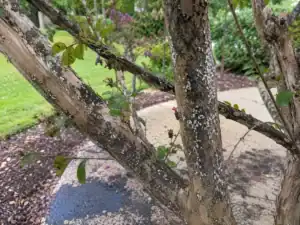
Crape myrtle bark scale doesn’t usually kill a healthy crape myrtle quickly, but heavy infestations of these tree pests can weaken a tree over time. The insect removes sap from the plant, which can reduce plant vigor and make the tree more vulnerable to other stressors.
Common Signs of an Infestation
A crape myrtle may be heavily infested if you notice:
- White or gray felt scale on the bark
- Sticky honeydew on branches or surfaces below the tree
- Black sooty mold on trunks, leaves, or nearby hardscapes
- Fewer blooms than expected
- Delayed leaf-out or weaker new growth
- Branch dieback or smaller limbs beginning to decline
Branch dieback can have more than one cause, so it should be evaluated by an experienced plant health care professional with the whole tree in mind. Drought stress, poor tree pruning, root issues, construction damage, or other insects can make a crape myrtle bark scale problem worse.
How Do You Get Rid of Crepe Myrtle Bark Scale?
Getting rid of crape myrtle bark scale usually takes more than one step. Simply wiping the tree can improve the its appearance, but it doesn’t treat the pest infestation. Likewise, insecticide treatment can reduce active scale but will not immediately remove old sooty mold, honeydew, or dead scale from the bark.
A crape myrtle bark scale treatment plan should include:
Removing visible scale and residue through careful cleaning
Horticultural oil sprays for exposed crawlers and young nymphs
Soil-applied systemic insecticides for longer-term control
Selective pruning and continued monitoring
The right combination depends on the tree’s size, the severity of the infestation, bloom timing, and the surrounding landscape.
For smaller, reachable crape myrtles, gently brushing the trunk with a soft bristle brush and water can help remove some visible scale, sticky honeydew, loose bark, and black sooty mold. Focus on rough bark and the areas where larger branches meet the trunk.
Avoid hard scraping or stiff wire brushes, which can damage living bark, especially on younger trees. This type of cleaning may improve the tree’s appearance and remove some insects, but it will not control a large or established bark scale infestation on its own.
Horticultural oil is a spray that coats and smothers small, exposed new insect pests before they develop the thicker white covering that helps protect older scale.
The spray needs to target the pest insects directly, so the trunk, branches, and rough bark areas need good coverage. On large or densely branched crape myrtles, that can be difficult without the use of professional equipment.
Some oil products may also be used in late fall or early spring, when the tree has dropped its leaves, depending on the product instructions and weather conditions. Oils should not be applied during extreme heat, drought stress, or other conditions listed on the label because improper timing can injure the tree.
A soil drench is an insect treatment applied to the ground around the base of the crape myrtle. The tree takes up the treatment through its roots, and the product moves into the plant as the tree grows. When bark scale insects feed on the tree, the treatment can help reduce the active population.
A soil treatment will not immediately wash away black sooty mold or remove old scale insects from the bark. It is intended to reduce the live scale population over time and is often paired with gentle cleaning, monitoring, and other care steps.
There is no single best product for every infestation, but CMBS treatment should account for:
- The size and overall health of the tree
- How heavily the tree is infested
- Whether the crape myrtle is actively blooming
- Pollinator activity around the tree
- Product label directions and site conditions
Crape myrtles are one of the many trees that are good for bee populations as well as other beneficial insects, so it’s important to plan your treatment carefully. A professional tree inspection will help determine whether treatment is necessary and which control option best fits your property’s needs.
CMBS Prevention for Long-Term Tree Health
Crape myrtle bark scale primarily affects crape myrtles, but it can occasionally appear on a limited number of other plants, including American beautyberry. In most Triangle landscapes, though, the greater concern is the spread of infestation from one crape myrtle tree to another.
Young scale insects can move short distances between nearby trees, and infested stock from nurseries can introduce the pest to your property. When one crape myrtle has CMBS, it is a good idea to inspect other crape myrtles nearby before honeydew and black sooty mold become obvious.

Inspect New Plants Before Buying
Before purchasing a new crape myrtle, inspect the trunk, branches, and larger branch connections for white or gray felt-like patches, sticky residue, or black sooty mold. Avoid trees that show signs of an active infestation, since infested nursery stock can bring bark scale into an otherwise healthy landscape.
If you already have crape myrtles on the property, inspect them regularly during the growing season, which is usually around late March through April, and continues until the tree drops its leaves in fall.
Plant Crape Myrtles in Full Sun
Crape myrtles perform best in when full sun, so if you are planting trees on your property, make sure they will get a lot of sun, and less shade. Trees planted in too much shade may have reduced flowering, slower drying after rain, and weaker overall growth. Dense shade can also make early pest activity harder to spot.
Avoid Excess Nitrogen Fertilizer
Too much nitrogen can encourage rapid, soft new growth that may be more attractive to sap-feeding insects like crape myrtle bark scale. Lawn fertilizer applied near the tree’s root zone can also affect nearby trees and shrubs, even when it was intended only for turf.
Beneficial Insects Can Help
Natural enemies of CMBS can reduce populations, including lady beetles, which feed on bark or felt scale. Beneficial insect species can help limit a light infestation but may not provide enough control once a tree is already infested.
When to Call a Raleigh Tree Service Provider

A small, early infestation on a young crape myrtle may be easier for a homeowner to monitor. Larger trees, repeated infestations, heavy sooty mold, or branch dieback will require a more complete plan.
A Raleigh area tree service company can confirm whether the issue is CMBS, aphids, powdery mildew, another insect pest, or a combination of problems. From there, a tree care plan can address the pest and the tree’s overall condition.
What an On-Site Visit Can Include
When working with Broadleaf Tree & Shrub, our on-site tree evaluation will include our certified arborists inspect the trunk, canopy, branch connections, root zone, mulch, irrigation patterns, and nearby plants. They may also look at pruning history, plant vigor, and whether the tree has stress from shade, soil compaction, drought, or construction.
This helps determine whether the tree needs insect control, tree pruning, systemic treatment, oil applications, or an ongoing plant health care plan.
Schedule Pest Management Services in Durham Today
Crape myrtle bark scale can spread, build up over multiple years, and leave infested plants and infested trees looking blackened, sticky, and stressed. Early treatment gives your tree a better chance to recover before heavy infestations reduce flowering, plant vigor, and canopy health.
At BroadLeaf Tree & Shrub, our plant health care experts provide disease prevention, insect control, and proactive care for residential and commercial properties in Raleigh, Cary, Durham, and surrounding Triangle communities. If you are seeing white scale, honeydew, black sooty mold, or branch dieback on your crape myrtles, contact our tree service company today.
To schedule an on-site consultation and receive a customized care plan, contact us by filling out the form below.