Root rot is a disease that causes a tree’s roots to decay, soften, and lose their ability to absorb water, take in nutrients, and anchor the tree in the ground. It often starts below the soil surface, where homeowners cannot easily see the damage.
In North Carolina landscapes, humidity, clay soil, poor drainage, and fungal disease can create the kind of wet, low-oxygen conditions where root rot develops. Over time, weakened roots can affect the health of the entire tree. Leaves turn yellow, the canopy thins, growth slows, and the tree becomes less stable.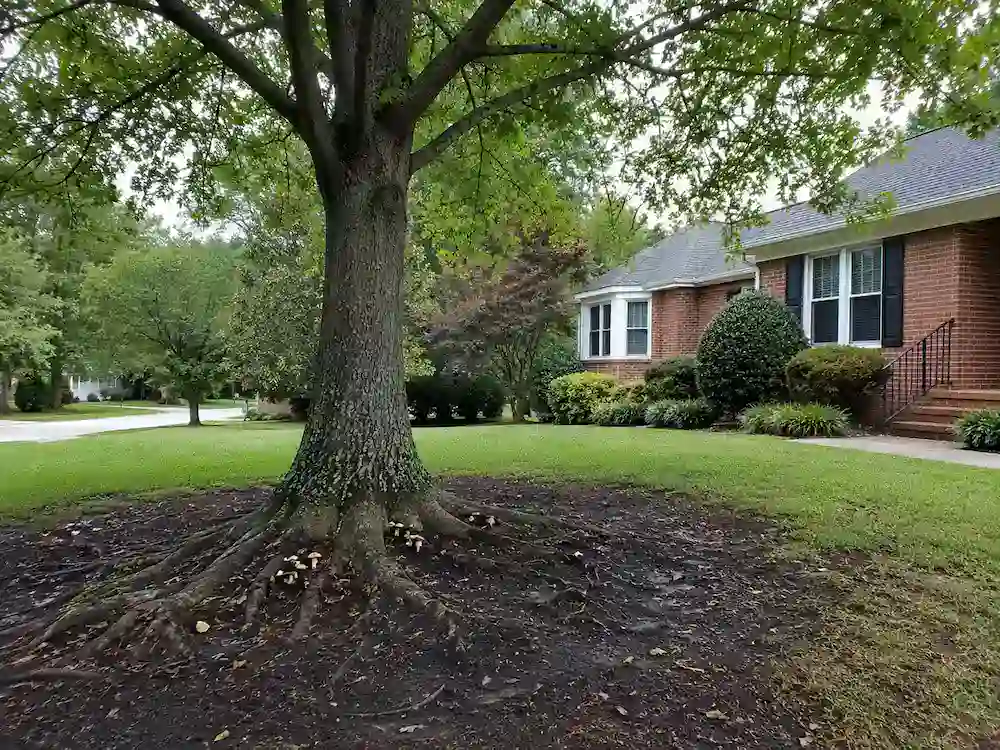
Knowing the early signs of root rot can help you act before tree removal becomes the only solution. Our goal at BroadLeaf Tree & Shrub is to pinpoint changes near the root flare, in the soil, and throughout the canopy before root damage turns into a prevalent problem in your yard or commercial landscape.
Table of Contents
The Invisible Danger Below the Soil Surface
Many tree and plant health problems begin underground. By the time a tree looks thin, starts leaning, or drops leaves out of season, its root system could already be in trouble.
How Root Rot Affects Tree Health
Root rot breaks down a tree’s roots, which are the source of water and nutrient absorbion as well as the structures that keep a tree anchored in the soil. Root rot damage is not always obvious at first. In fact, a homeowner may notice a thinning canopy or yellowing leaves and assume the tree needs more water, when the real problem is that the roots can no longer use the water already in the ground.
In many Raleigh and Durham area landscapes, root rot is tied to:
- Excess moisture in the clay soil
- Poor drainage that causes waterlogged soil
- Compacted areas of the plant’s soil
- Long humid stretches after heavy rain
The issue is not on water absorption alone. The bigger concern is what happens when roots sit in damp, low-oxygen soil for too long. Fungi and bacteria can become active, weakened roots begin to decay, and the tree slowly loses support from below.
When Root Rot Becomes a Safety Issue
For smaller plants or shrubs, root rot usually stunts growth, softens roots, or wilts leaves. For larger trees, however, the risk is much more serious. This is because roots do not just feed the tree, they hold it in place.
Once rot affects enough of the root zone, a tree can become less stable, especially during storms, saturated ground conditions, or high winds. That creates a real property risk. A weakened tree may drop large limbs, shift suddenly, or fail at the base without much warning. If it is growing near a home, driveway, fence, sidewalk, parked vehicle, or utility line, root damage can quickly become more than a plant healthcare issue. It can become a safety concern that needs prompt attention.
Common Signs and Early Indicators of Root Rot
It’s common for property owners to miss the presence of root rot when it first appears. Despite the tree looking dry, thin, or underfed even when the soil around it is wet, its easy to assume this is do to being under or over fed rather than something more severe happening beneath the surface.
How Root Rot Appears in the Tree’s Canopy
Above ground, the first signs of root rot are usually subtle. Homeowners may see one section of the tree declining before the whole canopy looks affected.

Common signs include:
- Yellowing leaves or thinning foliage
- Wilting leaves when the soil is still moist
- Stunted growth or smaller-than-normal leaves
- Early leaf drop
- Dead twigs or branch tips near the top of the canopy
- One side of the tree looking thinner than the other
These symptoms can look like drought stress, especially during a hot North Carolina summer. The difference is that watering may not help. If roots are rotting, adding more water can make the problem worse.
Signs of Root Rot Around the Tree’s Base
The root flare is the area where the trunk widens as it meets the ground and transitions into the main roots of the tree. On a healthy tree, this area should be visible, not buried under thick mulch or excess soil.
The root flare and surrounding soil can offer stronger clues than the canopy alone when root rot is present, including:
- Mushrooms or fungal growth near the trunk
- Soft, sunken, or unusually wet soil around the base
- Bark that looks loose, cracked, or discolored
- Your smell root rot, which is a sour, musty, or swampy smell near a tree’s base
- Exposed roots that look dark brown or black
- Roots that feel mushy, soft, or stringy instead of firm
- Soil that stays wet long after rain or irrigation

These signs do not always mean the tree is failing, but they should not be ignored. If they appear after heavy rain, repeated irrigation, or long stretches of wet soil, the root system may need to be evaluated before the tree becomes harder to save or poses a safety risk.
How to Treat a Tree Suffering From Root Rot
Treating root rot in a tree starts with understanding how much damage has already happened below ground. It’s easier to inspect, remove, replant, or prune shrubs, ornamental trees, or container plants. However, mature trees are different. Digging around the root system or cutting roots without a clear plan can make the tree more unstable.
Start With the Site Conditions
The first step is usually to correct the conditions that allowed root rot to develop in the first place. In many yards throughout Durham, Raleigh, Wake Forest and the surrounding areas, that means looking at drainage, irrigation, compacted clay soil, mulch depth, and whether water is collecting near the root flare.
A tree suffering from root rot often needs:
Less frequent irrigation
Better drainage around the root zone
Mulch pulled back from the trunk
Compacted soil addressed carefully
Standing water redirected away from the tree
Nearby soil or grade problems evaluated
Adding more water because the canopy looks dry can make the problem worse. If the roots are already weakened, wet soil can continue to feed the tree’s fungal infection.
Remove What Can Safely Be Removed
For smaller trees or shrubs, root rot treatment may include pruning away infected roots if the plant can be lifted or accessed without causing too much stress. Rotted roots often look brown or black and may feel mushy instead of firm.
For larger trees, root pruning should be handled carefully. Removing a significant portion of the root system can reduce stability, especially if the tree is already leaning or growing near a structure. In these cases, treatment is less about cutting roots and more about protecting the remaining healthy roots.
Support the Tree’s Recovery
Once drainage and moisture problems are addressed, the tree may need time to respond. Depending on the tree species and severity of the damage, care may include selective root pruning, soil health improvements, fungal treatments, or ongoing monitoring.
Contact Tree Health Care Professionals
Root rot is not always easy to judge from the surface. A thinning canopy, wet soil, mushrooms near the trunk, or a soft root flare may point to root damage, but the next step depends on the tree’s species, size, location, and stability.
If you suspect root rot in a mature tree, contact the tree health care professionals at Broadleaf Tree & Shrub before digging, cutting roots, or adding more water. Our Durham tree disease management experts can assess the tree or plant’s root system to help determine whether the tree may respond to treatment, needs ongoing monitoring, or has become hazardous enough to consider tree removal.
Contact Broadleaf Tree & Shrub to Assess Signs of Root Rot
If you suspect root rot is affecting a tree, shrub, or other plant on your residential or commercial property, contact BroadLeaf Tree & Shrub to schedule an on-site assessment.
Root rot spread can damage nearby healthy plants, weaken the tree’s structure, and create symptoms that look like drought stress or nutrient deficiency. Our team identifies signs of root rot by evaluating the root zone, drainage conditions, canopy health, and overall stability to help determine whether treatment, monitoring, or removal is the right next step.
Based in Durham, we provide comprehensive tree care services in the surrounding areas including Raleigh, Holly Springs, Cary, Apex, Hillsborough, Morrisville, and Chapel Hill. To schedule a consultation, fill out the form below and we will follow up with you shortly.