Many tree species across Durham, Raleigh, and the surrounding Triangle areas may continue showing the effects of summer drought well after temperatures cool and regular rainfall returns.
After periods of extended heat, dry soil, compacted root zones, and inconsistent summer storms, drought stress on trees is brought on. This happens because the small roots that usually absorb water and nutrients become weakened, causing the tree to struggle to recover even after rainfall returns.
Healthy trees are often better able to recover, but trees already stressed by poor soil, restricted roots, pests, or disease may need an evaluation from a tree care professional before the damage progresses.
Table of Contents
What Is Drought Stress on Trees?
Drought stress develops when a tree cannot absorb enough water from the soil to support its leaves, branches, trunk, and roots. It may happen during a few weeks of extreme heat or after a longer stretch with little meaningful rainfall.
A tree does not need to look dead to be under stress. In many cases, the first signs are subtle, such as dull foliage, curling leaves, slower growth, or leaves dropping earlier than expected.
How Trees Respond When Water Is Limited
Trees take in water through thousands of small roots growing through the upper layers of soil. These roots also absorb nutrients that support new growth and help the tree recover from heat, pests, tree pruning, or other stress.
The water then travels upward through the tree’s trunk and branches to the leaves. Some large trees use more than 100 gallons of water on a hot day, while some mature trees can use close to 200 gallons.

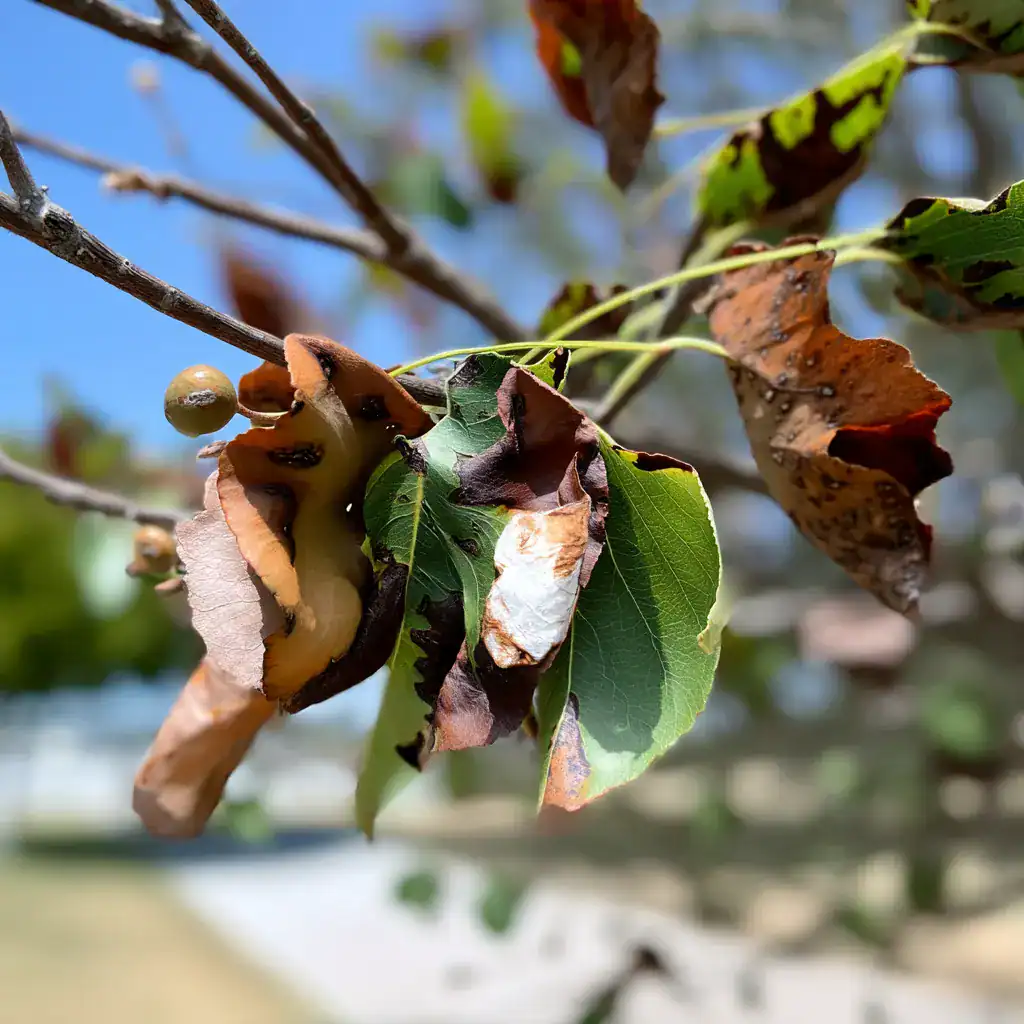
When the soil becomes too dry from the effects of drought, the tree begins conserving what water it has. It may slow its growth, reduce normal food production in the leaves, or allow some leaves to wilt, develop brown edges, and fall early. These are not just appearance problems. They are signs that the tree is struggling to supply its canopy with enough moisture.
Why Some Tree Species Handle Drought Better Than Others
Some well established trees handle dry weather better than others. Some trees have deep roots that are able to reach moisture below the surface, while trees with thick, waxy leaves help slow water loss. Trees that grow near streams or wetlands are often more susceptible to disease and struggle more when soil stays dry.
Symptoms of Drought Stress in Trees
Drought symptoms often show up in the leaves first, but homeowners should also check the canopy, branches, bark, and signs of insect activity.
Early Signs Homeowners May Notice
Wilting leaves
Curling leaves
Lighter green or yellow-green foliage
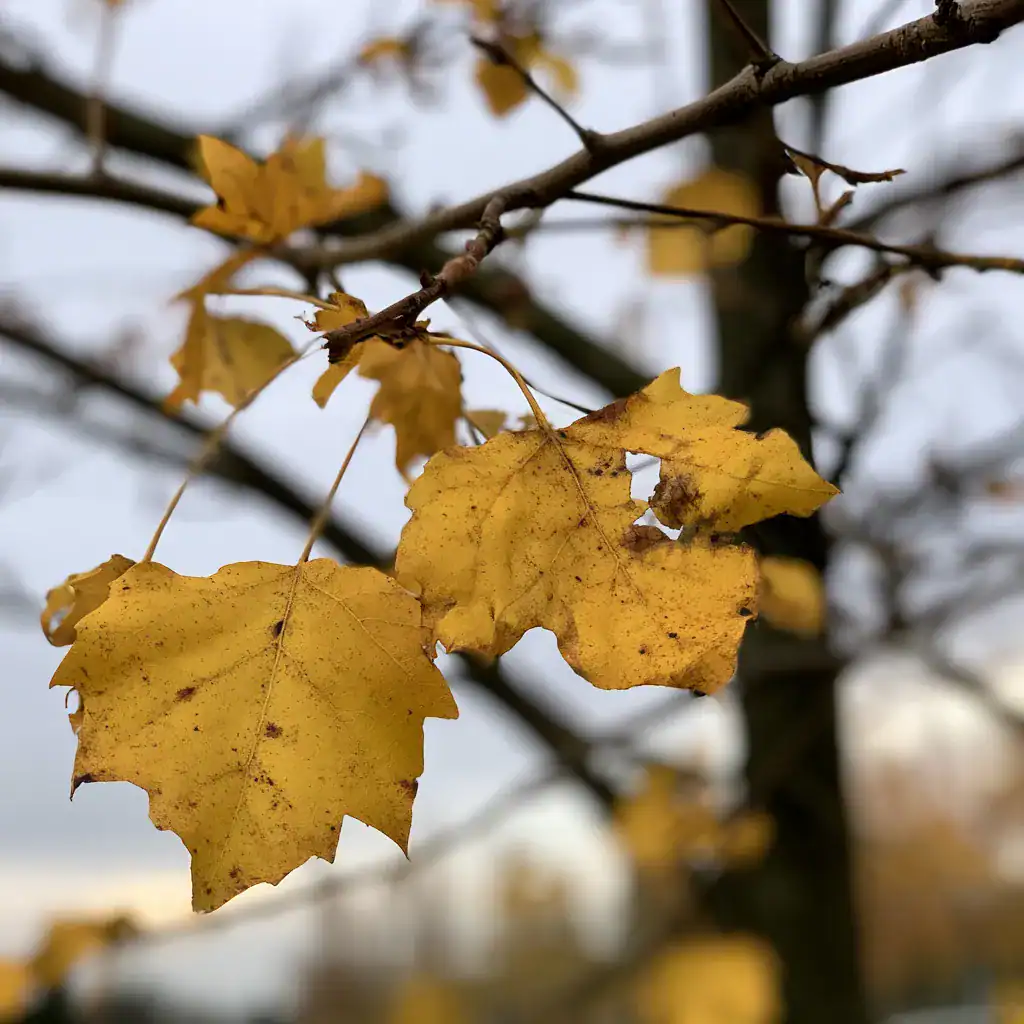
Leaf scorch that turns leaf edges brown or yellow
Early leaf drop
Short or stunted new growth
Increased seed production
Brown needle tips on conifers
Serious Signs of Long-Term Tree Stress
Thinning canopy
Branch dieback
Bark cracks
Root loss
Dead small roots that absorb water
Increased insect activity
Poor leaf growth the following spring
Large sections of dead or declining branches
A tree that appears stable after rain returns but then loses branches or leaves months later is a sign that there is more serious damage below ground. Even weeks or months later, extended dry weather conditions have lasting effects that weaken the root system the tree depends on for water.
Why Drought Stressed Trees Are Vulnerable to Pests and Disease
Drought events weaken the systems trees use to resist insects and disease. Water stress often creates the opening for a later problem.

Drought-Stressed Trees and Insect Problems
Tree pests like pine bark beetles and wood boring insects are more likely to attack weakened trees. A healthy tree may produce resin or other defenses that slow an attack. A drought-stressed tree may not have enough water or energy to respond as strongly.
Conifers and some hardwoods show delayed symptoms. Insects may be active under the bark before needles fade or branches die.
Drought Stress and Tree Disease Risk
Diseases take advantage of weakened bark, declining branches, and reduced defenses. Hypoxylon canker, for example, is often associated with trees stressed by drought, root injury, or other environmental pressure.
A discolored canopy may point to drought, root loss, insects, disease, or several problems at once.
How to Help Trees Recover From Drought Stress
Recovery usually starts below ground. Trees need steady moisture, healthy roots, and enough oxygen in the soil. Extra water or fertilizer will not correct every problem, especially when roots are damaged or restricted.
How to Water Trees During and After Dry Conditions
Give established trees about one inch of water per week
Water newly planted trees about twice a week, depending on rainfall, drainage, and soil conditions
Water slowly so moisture soaks into the soil instead of running across the surface
Aim for moist soil about 12 inches deep
Choose deep watering over frequent, light watering
Continue checking soil moisture even after rain, since brief storms may not reach the deeper root zone

Mulch, Soil Moisture, and Root Protection
Apply two to four inches of mulch over the root area
Keep mulch several inches away from the trunk
Avoid piling mulch against the bark, where it can trap moisture and hide decay
Watch for compacted soil, which limits water and oxygen movement
Check sandy soil more often because it may dry out quickly
Some deciduous trees have roots that circle the trunk or are buried too deeply. Water and mulch will not correct these problems. After an inspection, professional root pruning can help remove problem roots or uncover the tree’s natural root flare.

Proactive Tree Health Care for Long-Term Recovery
Plant health care may include:
Monitoring changes in the canopy
Checking for new branch dieback
Improving soil and root conditions
Identifying insect or disease activity early
Adjusting watering after another dry period
Tracking recovery into the next growing season
In our work across the Triangle, Broadleaf Tree & Shrub recommends assessing a stressed tree before large sections of the canopy die. Once the damage becomes severe, treatment options may be more limited.
Drought Stressed Tree FAQs
Does drought permanently damage tree roots?
It can. Severe or repeated drought may kill small water-absorbing feeder roots, while mild damage may improve with steady moisture and proper care.
How do you make a tree healthy again after drought?
Start with deep watering, correct mulch placement, steady soil moisture, and root protection. Avoid heavy pruning or fertilizer until the cause of decline is clear.
Should I fertilize a dying tree?
Not without an evaluation. Fertilizer may worsen stress when the real problem is drought, damaged roots, compacted soil, pests, or disease. If you see signs of a dead tree on your property, contact Broadleaf Tree & Shrub today.
Should I remove a drought-stressed tree?
Not always. Removal may be needed if the tree is dead, unstable, or has hazardous branches. A professional at Broadleaf Tree & Shrub can determine whether treatment, pruning, monitoring, or tree removal is appropriate.
Can tree drought stress attract insects?
Yes. Pine bark beetles and wood boring insects often target weakened trees because those trees have fewer natural defenses.
Schedule a Tree Health Evaluation in the Triangle
Rain returning does not always mean a stressed tree has recovered. BroadLeaf Tree & Shrub can evaluate the canopy, roots, soil, and pest activity, then recommend next steps.
Schedule a tree health consultation in Durham, Raleigh, or surrounding communities of the Triangle with our tree disease and pest management team by filling out our contact form.