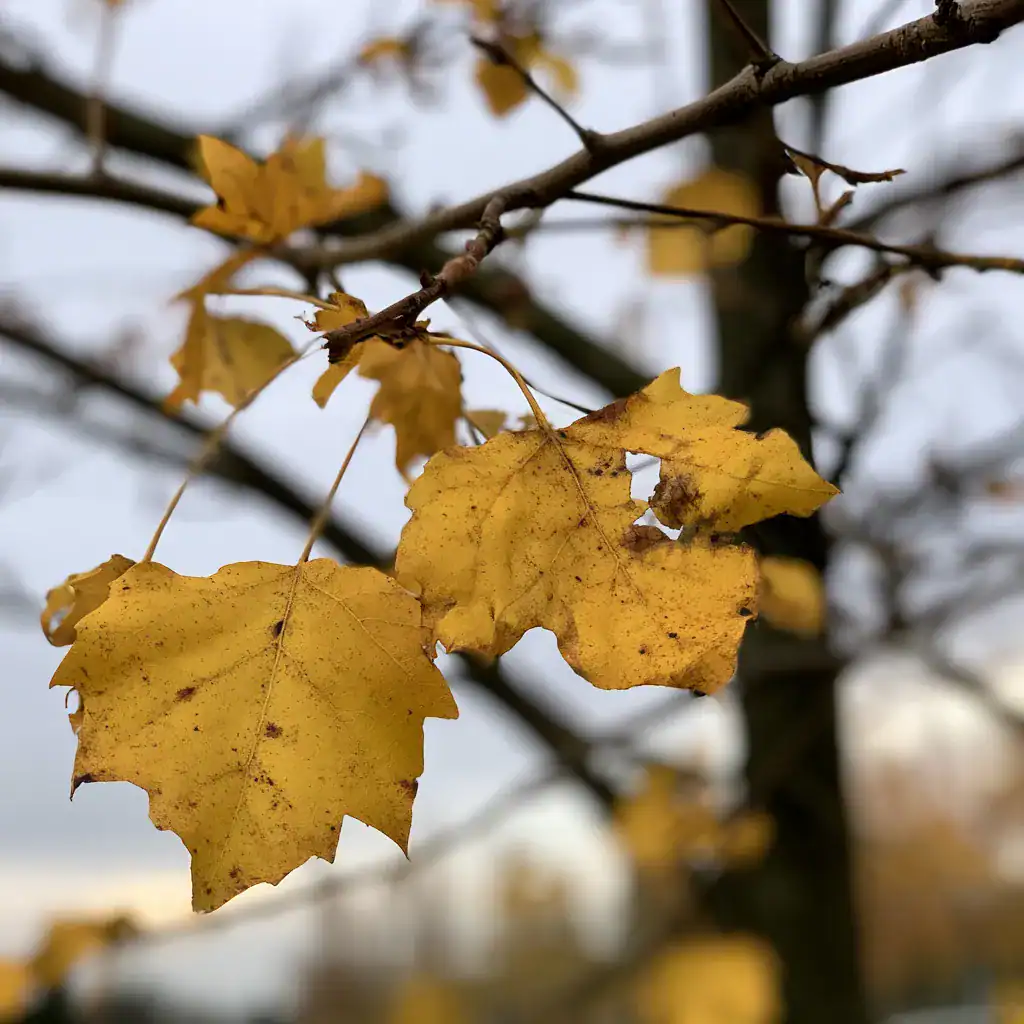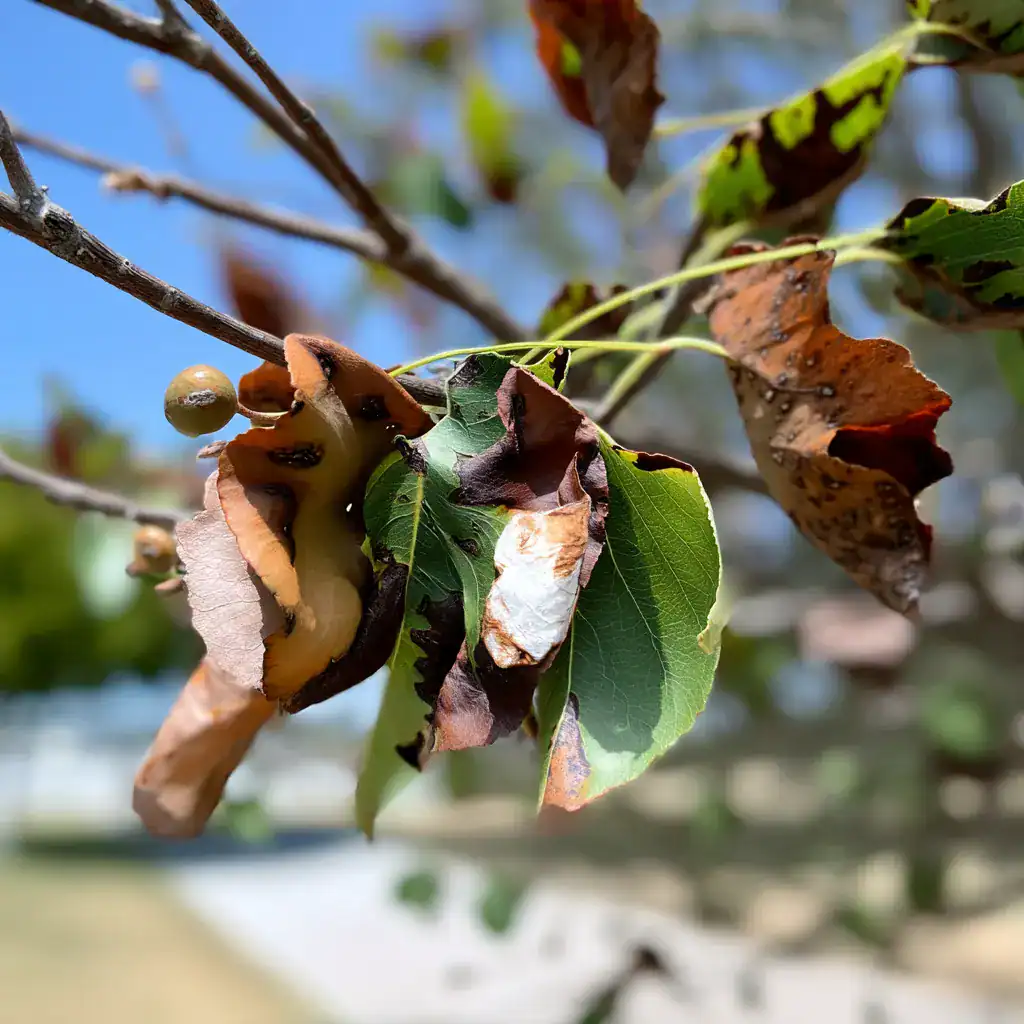
Hot, dry weather tends to weaken trees before obvious symptoms of decline appear. During long stretches of heat, low rainfall, and dry soil, in Raleigh, Durham, and surrounding areas of the Triangle, a tree may lose moisture faster than its roots can replace it. Leaves curl, branches thin, and a mature tree that looked healthy in spring shows signs of stress by late summer.
This cycle does not always mean the tree is dying, but it does mean the tree’s health should not be ignored. Proactive plant and tree health care services help homeowners identify tree stress early, protect mature trees, support shrubs and plants, and reduce the chance that professional tree removal becomes the only safe option.
What Is Tree Health Care?
Tree health care is preventive care for trees, shrubs, roots, and soil. Instead of waiting until a tree has dead branches, fungal growth, or visible decline, a tree care professional looks at the full condition of your property to understand what may be affecting the tree’s decline.
Preventive Care for Trees, Shrubs, and Soil
At Broadleaf Tree & Shrub, our tree health care services include monitoring a tree’s structure, evaluating soil conditions, identifying presence of insects and disease, supporting root systems. Our highly skilled team will also recommend whether tree pruning, trimming, treatments, or other tree services will help support the tree’s recovery.
A tree’s health is not based only on the leaves you can see. Roots, soil, water access, mulch depth, trunk condition, and branch structure all affect how well a tree handles summer stress.
Why Hot, Dry Weather Puts Tree Health at Risk
The ongoing heat, limited rainfall, and poor soil conditions of North Carolina summers can stress roots, branches, leaves, and the overall health of the tree.
Heat and Drought Create Environmental Stress
This is the heading
Compacted Soil Makes Dry Weather Worse
This is the heading
Newly Planted Trees Need Extra Support
This is the heading
The Benefits of Proactive Tree Care During Summer
Proactive tree care gives homeowners and property managers more time to make good decisions. Instead of reacting after a branch falls or a tree declines quickly, routine tree services can reveal problems while there is still time to treat, prune, monitor, or plan for removal if needed.
Healthy trees are better able to handle heat, drought, insects, disease, and storm stress. They also provide shade, structure, and beauty throughout the property.
During a tree and plant health inspection, professionals may identify deadwood, branch defects, bark cracks, root flare issues, compacted soil, drainage problems, insect activity, or disease symptoms that are not obvious from a distance.
Early detection is often less costly than waiting until the tree becomes hazardous or removal is needed to take care of the problem.
Tree preservation often includes pruning ornamental trees and implementing advanced crown thinning methods to improve structure and remove weak, damaged, or dead branches. Tree trimming improves appearance, but it should not be treated as simple cutting.
Tree removal is sometimes necessary, especially when there are signs of a dead tree that may become hazardous or structurally compromised. Dead trees can pose significant safety hazards, and removing a hazardous tree can prevent property damage.
Still, not every declining tree is past the point of care. Proactive health care services may help preserve trees before decline becomes severe.
Services for a Holistic Approach to Tree Health Care
Tree health care does not look the same on every property. A small residential yard with a newly planted ornamental tree may need different care than a commercial property with mature trees near parking areas, sidewalks, turf, and storm drains.


Professional Tree Health Evaluation
The process begins with a professional evaluation of your property’s trees, including a canopy assessment, bark and branch inspection, soil review, tree disease and pest screening, and discussion of watering and maintenance history.
At Broadleaf Tree & Shrub, our certified arborists can analyze tree health and soil issues together. The symptom may be in the canopy, but the cause may be underground.
Soil Health Services and Soil Aeration
Poor soil quality, toxic chemicals, and compacted soil can weaken trees. If roots cannot access enough oxygen, water, or nutrients, the tree may decline even when leaves are watered regularly.
Soil aeration helps improve movement through the root zone in order to avoid root rot before a tree becomes hazardous, while organic amendments may support better soil structure over time.

Mulching, Watering, and Root Support
Organic mulch helps retain moisture, moderate soil temperature, and reduce competition from grass near the trunk. It should be spread over the root area, not piled against bark.
Deep watering encourages stronger root development by moving moisture farther into the soil. During dry summer weather, newly planted trees, vulnerable species, and trees in compacted soil may need closer attention, such as root pruning or other methods to support healthy trees.
Disease Control and Pest Management
Treatments for common tree issues may include disease control, management of common tree pests, and multi-season monitoring. The treatment should match the diagnosis.
A tree with browning leaves may have drought stress, root damage, insect activity, disease, or a combination of issues. The right plan starts with the right diagnosis and prompt service.
Tree Pruning, Tree Trimming, and Hand Pruning
Tree pruning can improve structure and remove weak or damaged branches. Tree trimming can improve appearance and reduce risk when performed correctly. Hand pruning may be appropriate for ornamental trees, shrubs, or selective shaping where careful cuts are needed.
Tree Risk Assessments and Storm Recovery
Tree risk assessments help identify hazards before storms. They are useful before storm season, after severe weather, or when a tree is near a home, driveway, sidewalk, playground, parking area, or commercial entrance.
After a storm, our professionals can inspect damaged branches, leaning trees, cracked trunks, and compromised root zones. Emergency tree removal services may be needed when a tree or large branch creates an immediate hazard.
Why Work With Certified Arborists?
A trained arborist can help determine whether a tree is showing normal seasonal stress or signs that need faster attention.
At Broadleaf Tree & Shrub, our certified arborists support decisions about:
Treatment, pruning, monitoring, or removal: ISA Certified Arborists are trained in tree biology, pruning standards, disease control, risk assessment, and soil issues.
A tailored plan for the property: Different tree species, ages, soil conditions, and locations require different care, from watering guidance to pest monitoring or pruning.
Tree-specific recommendations: A mature oak near a driveway should not be evaluated the same way as a newly planted ornamental tree in full sun.
Local growing conditions: Trees in Chapel Hill, Raleigh, Durham, Cary, Apex, Morrisville, Hillsborough, and nearby NC areas face summer heat, compacted soil, local pests, and sudden storms.
Native and ornamental tree care: Local professionals understand how regional weather, soil, and pest pressure affect common trees across Triangle-area properties.
Schedule Tree Health Care Services During Hot, Dry Weather
Concerned about browning leaves, dead branches, compacted soil, insect activity, or fungal growth during hot, dry weather? BroadLeaf Tree & Shrub offers professional tree health care services to help evaluate stress, protect tree health, and recommend the right next steps for your property.
Fill out the form below to schedule a tree health consultation today. We serve Durham, Raleigh, Morrisville, Apex, Cary, Hillsborough, Chapel Hill, and nearby areas.